Glass, Acrylic & Screen
Glass and Screen Enclosure Repair in Jacksonville, FL
Enclosures that mix glass, acrylic, or vinyl panels with screen — and what can be repaired versus replaced.
Plenty of Jacksonville lanais and Florida rooms are not pure screen. They combine screened openings with sliding glass doors, acrylic or vinyl panel systems, or glass windows added later to make the space usable year-round. When one of those panels fails, the repair question gets more complicated than a torn screen.
Our work is the aluminum-and-screen side of that structure: the extruded frame, the screen panels, the kickplates, the fasteners, the doors, and the tracks. That covers the majority of what actually fails on a mixed glass-and-screen enclosure, because the frame and the screen age far faster than the glazing does.
For the glazing itself, this page explains what is repairable, what has to be replaced, and where a licensed glazier needs to be involved instead of a screen contractor. We will tell you which category your enclosure falls into at the estimate rather than after the invoice.
What Fails on a Mixed Glass and Screen Enclosure
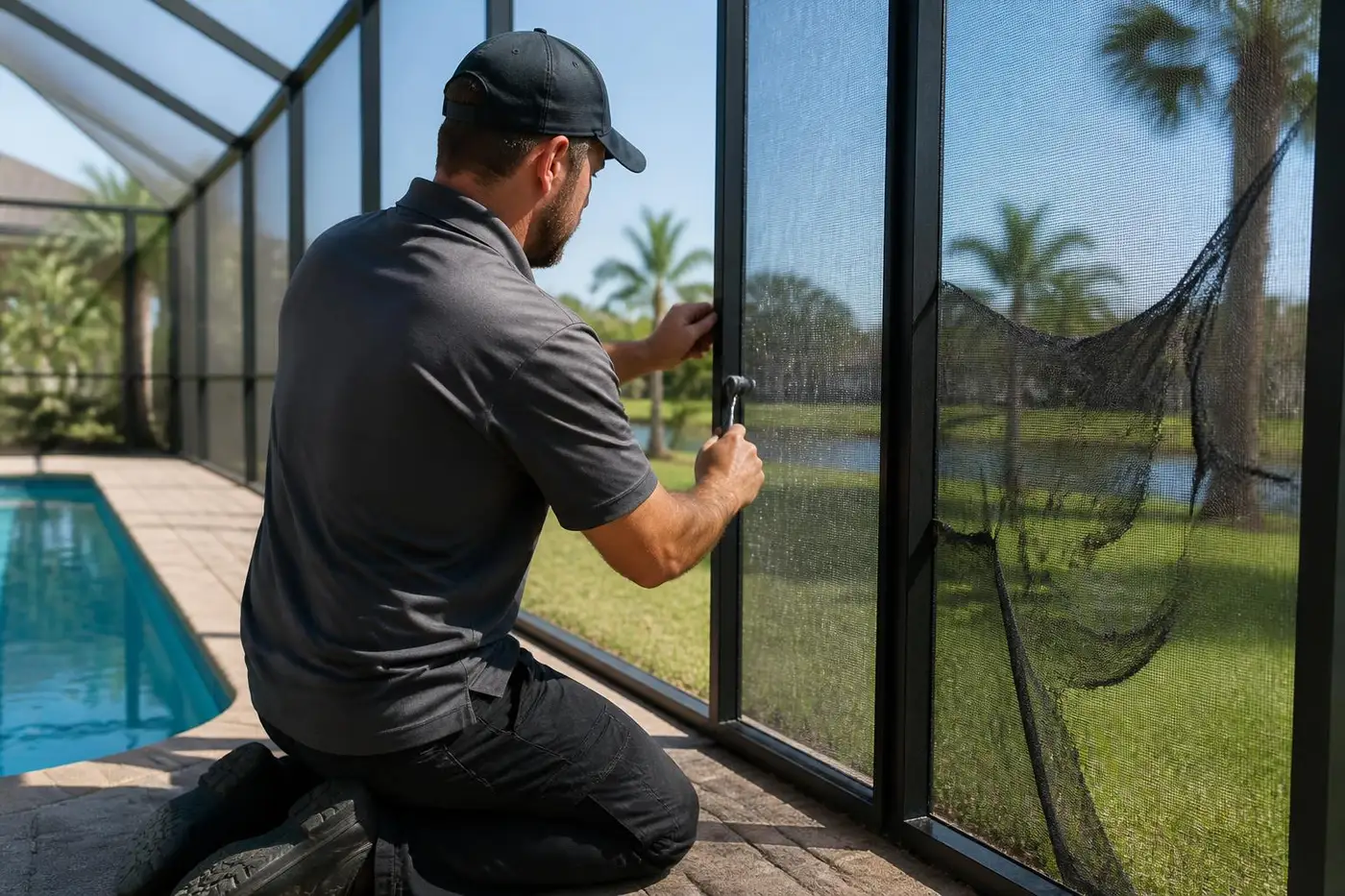
The frame goes first. Salt air, sprinkler overspray, and years of UV attack the aluminum and the fasteners holding it together long before they bother the glass. Rusted screws swelling inside an extrusion will crack a frame member and throw a slider out of square, and homeowners often read that as a door problem when it is a frame problem.
Tracks and rollers are next. Sliding glass and vinyl panel systems on a lanai collect sand and pollen in the track, which chews through rollers and makes panels bind. Cleaning, re-shimming, and replacing rollers restores most of them.
Screen panels in the mixed sections age exactly like they do on a pool cage: brittleness, spline shrink, sag, and tears at the corners. Those we replace on site.
Acrylic and vinyl glazing yellows, hazes, and can crack at the fastener line. Vinyl roll-down or slide-track window systems are typically replaced panel by panel rather than repaired.
Aluminum frame repair
Straightening, splicing, and replacing corroded members that hold both the glass and screen sections.
Fastener replacement
Swapping rusted screws for corrosion-resistant hardware before they split the extrusion.
Screen sections
Rescreening the mesh openings on lanais and Florida rooms that mix screen with glazing.
Door and track service
Rollers, latches, closers, and track cleaning for sliding and swing doors.
Kickplate and base repair
Rebuilding the corroded lower sections where water sits against the slab.
Honest referral
When a job needs tempered or insulated glass replaced, we say so and point you to a licensed glazier.
Glass, Acrylic, and Vinyl — Which Is Which
Tempered glass panels are heavy, cold to the touch, and usually sit in a substantial frame with a manufacturer's stamp in a corner. Broken tempered glass shatters into small pebbles and must be replaced as a unit by a glazier.
Acrylic panels are lightweight, flex when pressed, and haze or yellow with UV exposure rather than shattering. They are commonly used in patio and porch enclosures and are replaced rather than repaired once crazed.
Vinyl window systems are flexible clear sheets in an aluminum track, often on screened porches converted for winter use. Individual panels are replaced; the tracks and frame we service directly.
If you are not sure which you have, send us a photo of a corner of the panel and the frame profile — that is usually enough to identify the system.
Converting Screen to Glass, or Glass Back to Screen
Homeowners sometimes want a screened lanai glazed in for year-round use, or an aging glass room returned to open screen for airflow. Both change the load on the structure and can affect permitting, so they start with a look at the existing frame, anchors, and slab rather than a quote over the phone.
The screen direction is straightforward: we remove the glazing system and rescreen the openings in the existing frame. The glass direction usually involves a glazing contractor and, depending on scope, a permit — we will tell you honestly where our work stops.
Keep Reading
Related services to compare
Fix it first: Screen Enclosure Repair
Targeted fixes for torn screen, damaged panels, doors, frames, hardware, and storm damage.
Pool Enclosure Repair in Jacksonville
Targeted fixes for torn screen, damaged panels, doors, frames, hardware, and storm damage.
Repair option: Storm Damage Screen Enclosure Repair
Targeted fixes for torn screen, damaged panels, doors, frames, hardware, and storm damage.
Fresh mesh with Screen Enclosure Rescreening
Fresh mesh across a panel, a wall, or an entire pool cage, with the screen type matched to how you use the space.
Screen Enclosure Installation for Jacksonville homes
New pool cages, pool enclosures, lanais, screened patios, screen rooms, and custom aluminum structures.
Planning Pool Enclosure Installation
New pool cages, pool enclosures, lanais, screened patios, screen rooms, and custom aluminum structures.
Local Coverage
Glass & Screen Enclosure Repair across the Jacksonville area
Glass & Screen Enclosure Repair in St. Johns
Glass & Screen Enclosure Repair in Fruit Cove
Glass & Screen Enclosure Repair in Julington Creek
Glass & Screen Enclosure Repair in Mandarin
Glass & Screen Enclosure Repair in Ponte Vedra Beach
Glass & Screen Enclosure Repair in Nocatee
Glass & Screen Enclosure Repair in Jacksonville Beach
Glass & Screen Enclosure Repair in Orange Park
Glass & Screen Enclosure Repair in St. Augustine
Glass & Screen Enclosure Repair in Atlantic Beach
Glass & Screen Enclosure Repair in Neptune Beach
Glass & Screen Enclosure Repair in World Golf Village
Glass & Screen Enclosure Repair in Green Cove Springs
Glass & Screen Enclosure Repair in Middleburg
Glass & Screen Enclosure Repair in Fleming Island
Glass & Screen Enclosure Repair in Rivertown
FAQ
Glass & Screen Enclosure Repair questions
Do you repair glass panels in a screen enclosure?+
We repair the aluminum frame, screen panels, doors, tracks, and hardware that hold the glazing. Broken tempered or insulated glass has to be replaced by a licensed glazier, and we will tell you that at the estimate rather than after the work starts.
Can a cracked acrylic or vinyl panel be repaired?+
Generally no. Once acrylic crazes, yellows, or cracks at the fastener line, the panel is replaced. Vinyl window systems are also replaced panel by panel. The tracks and frame around them can usually be serviced.
My sliding door on the lanai sticks — is that a glass problem?+
Usually not. Sticking sliders are most often dirty tracks, worn rollers, or a frame that has moved because a fastener corroded. All three are repairable on site.
Can you convert my screened lanai to glass, or glass back to screen?+
Returning glazed openings to screen is straightforward work in the existing frame. Adding glass changes the structural load and often requires a glazing contractor and a permit, so it starts with an on-site look at the frame and anchors.
Call (904) 853-3510 for glass and screen enclosure repair anywhere in the Jacksonville area.
Request an estimate