
Choosing the right mesh
Screen Mesh Replacement for Jacksonville, FL Enclosures
Compare fiberglass, aluminum, and specialty mesh before your next rescreen.
When it's time to rescreen a lanai or pool cage in Jacksonville, the panel itself is only half the job. The mesh you choose determines how much sun and pollen come through, how the screen holds up to salt air near the beaches, and how long you'll go before doing this again.
Most enclosures around town were built with standard 18x14 fiberglass mesh, and that's still a fine, budget-friendly default for a lot of homes. But we install several other mesh types every week, and the right pick usually depends on what's bugging you about the current screen more than what came with the house originally.
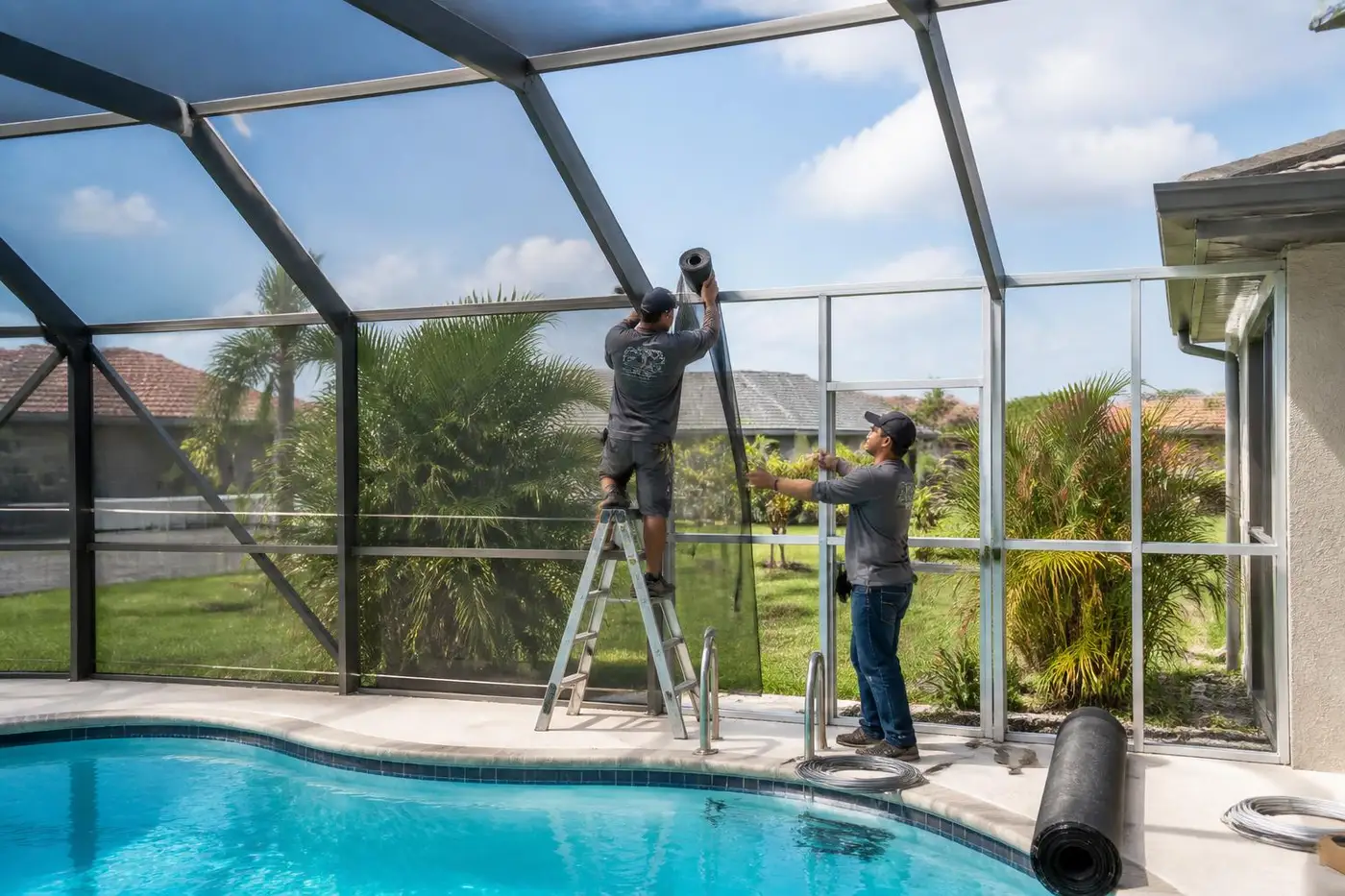
What Screen Mesh Replacement Actually Involves
Replacing mesh means pulling the old screen and spline out of the aluminum frame's spline channel, cutting new material to size with slack for tensioning, and rolling fresh spline into the groove to lock it in tight. On a pool cage or lanai this happens panel by panel, working around kickplates, chair rails, and door frames.
It's a different job than replacing bent framing or resetting anchors. If the aluminum extrusion is straight and the frame is sound, mesh replacement lets us refresh the whole look and function of an enclosure without touching the structure.
Why Jacksonville Homes Need This So Often
UV exposure through a Northeast Florida summer breaks down fiberglass screen fibers over several years, and coastal properties see faster wear from salt in the air. Add in pollen season coating everything each spring and afternoon storms during hurricane season, and most screens start showing their age well before the frame does.
Mesh Options We Install
Standard 18x14 fiberglass is the most common choice — it's affordable, easy to work with, and blocks typical bugs while keeping airflow good. Aluminum mesh is stiffer, holds its shape longer, and resists tearing from pets or debris, though it can oxidize faster on the coast. Beyond those two, specialty meshes like solar/privacy screen and 20x20 no-see-um weave trade some airflow for tighter visibility control or smaller-bug protection.
18x14 fiberglass
Standard weave, good airflow, most economical, typical 8-10 year lifespan in this climate.
Aluminum screen
More rigid, better pet and debris resistance, can show oxidation spots near saltwater.
Solar/privacy mesh
Cuts glare and sightlines, reduces airflow somewhat, popular on pool cages facing neighbors.
No-see-um mesh
Tighter weave for biting gnats, noticeably reduces airflow and can trap more pollen.
Repair vs. Full Mesh Replacement
A handful of small tears or a couple of loose panels can sometimes be patched or re-spun individually. But if the mesh is brittle and cracking when you press on it, or if half the panels already have holes, it's more cost-effective to rescreen the whole enclosure at once rather than come back every few months for spot repairs.
Our Rescreen Process
We walk the enclosure first to check the frame, spline channels, and fasteners before quoting mesh work — no point installing new screen into a channel that's cracked or corroded. From there we remove old material, replace any damaged spline, install the new mesh with proper tension so it doesn't sag or drum in the wind, and trim it clean at the edges.
Weather Factors That Affect Mesh Choice
Sun exposure, humidity, wind load during storms, and salt air all play into which mesh makes sense for a given house. A west-facing pool cage that bakes all afternoon is a good candidate for solar mesh, while a screened porch tucked under oak trees dealing with gnats might do better with a tighter weave, understanding that airflow will drop some.
Planning Your Budget
Mesh replacement pricing depends on total screen square footage, mesh type selected, panel height, and how many corners or curved sections the enclosure has. Fiberglass runs less per panel than aluminum or specialty weaves, and larger two-story cages take longer to access and re-tension than a single-story lanai.
When Only the Mesh Needs Replacing
Mesh replacement is the narrow case: the frame is straight, the spline channels are clean, the hardware is sound, and the screen itself has reached the end of its life. That's most enclosures at the 8-to-12 year mark in Jacksonville, where UV rather than damage is what finally kills fiberglass mesh.
The test is simple - press the screen with a thumb. If it gives without tearing, it has life left. If it splits or leaves a permanent dimple, the material is embrittled and patching it is a waste of a service call. If the frame is also loose or bent, this isn't the right service; the frame work has to happen first or the new mesh will be disturbed twice.
Mesh Grades and the Failures They Fix
Standard 18x14 fiberglass is the default and the most economical. Above it sit tighter no-see-um weaves, pet-grade polyester, heavier-denier pool screen, and solar or privacy weaves that trade airflow and visibility for shade. Each installs into the same spline channel, so the frame doesn't limit your choice.
The defects that bring people here are brittle mesh splitting along the spline line, sun-side panels faded lighter than the rest, small holes at the base where lizards and frogs push through, ballooned panels that never recovered tension, and old patches that have gone stiff and yellow. New spline goes in with every panel - reusing shrunken spline is the single most common reason a re-screen fails early.
What Changes the Price
Panel count is the base number, and panel size matters as much as count: two tall pool-side panels can cost more than six small patio bays. Mesh grade is the second variable, with pet-resistant and heavy-duty material running well above standard fiberglass per square foot.
Height and access come third - upper panels on a mansard cage take longer than panels you can reach from the deck. Doing the whole enclosure at once is cheaper per panel than replacing a few now and a few next year, and it avoids the mismatched look of new mesh next to faded.
Keep Reading
Related services to compare
Fix it first: Screen Panel Replacement
Targeted fixes for torn screen, damaged panels, doors, frames, hardware, and storm damage.
Screen Enclosure Replacement explained
Full replacements and rebuilds when an aging or storm-damaged enclosure is past practical repair.
Full rebuild: Pool Cage Replacement
Full replacements and rebuilds when an aging or storm-damaged enclosure is past practical repair.
When repair is done: Pool Enclosure Replacement
Full replacements and rebuilds when an aging or storm-damaged enclosure is past practical repair.
Pool Cage Door Replacement details
Doors, reinforcement, fasteners, painting, and restoration work that extends an enclosure's usable life.
Upgrade: Screen Enclosure Fastener Replacement
Doors, reinforcement, fasteners, painting, and restoration work that extends an enclosure's usable life.
Local Coverage
Screen Mesh Replacement across the Jacksonville area
Screen Mesh Replacement in St. Johns
Screen Mesh Replacement in Fruit Cove
Screen Mesh Replacement in Julington Creek
Screen Mesh Replacement in Mandarin
Screen Mesh Replacement in Ponte Vedra Beach
Screen Mesh Replacement in Nocatee
Screen Mesh Replacement in Jacksonville Beach
Screen Mesh Replacement in Orange Park
Screen Mesh Replacement in St. Augustine
Screen Mesh Replacement in Atlantic Beach
Screen Mesh Replacement in Neptune Beach
Screen Mesh Replacement in World Golf Village
Screen Mesh Replacement in Green Cove Springs
Screen Mesh Replacement in Middleburg
Screen Mesh Replacement in Fleming Island
Screen Mesh Replacement in Rivertown
FAQ
Screen Mesh Replacement questions
How long does fiberglass mesh last in Jacksonville?+
Typically 8-10 years depending on sun exposure and proximity to the coast, though heavy salt air can shorten that.
Can I mix mesh types on one enclosure?+
Yes, some homeowners use solar mesh on sun-facing panels and standard fiberglass elsewhere to balance cost and comfort.
Does tighter mesh reduce airflow that much?+
Yes, no-see-um and privacy weaves noticeably cut breeze compared to standard 18x14, which matters most on lanais used for outdoor living.
Will new mesh fix a sagging screen?+
If the frame is straight, fresh mesh with proper spline tension usually resolves sagging; a bent frame needs separate attention.
Do you replace spline along with the mesh?+
We check spline condition on every panel and replace it when it's brittle or cracked, since old spline won't hold new screen tight.
Call for a free estimate and we'll walk your enclosure to recommend the right mesh for your home.
Request an estimate