About Us
A Jacksonville-Focused Approach to Screen Repair
Screen Enclosure Repair Jacksonville was built around a simple idea: homeowners should be able to get clear help for screen problems without turning a small repair into a complicated project. The business grew from hands-on repair work around Jacksonville, where screened pools, patios, and lanais are part of everyday life and where sun, humidity, wind, tree debris, and seasonal storms can be hard on mesh, spline, doors, and enclosure components.
Our work is coordinated by a small local team that values careful inspection and straightforward communication. Caleb Morgan oversees customer projects and repair planning, Luis Ramirez coordinates field scheduling and material preparation, and Derrick Hayes focuses on detailed screen and door repairs. The goal is not to push every enclosure toward a complete rescreen. It is to understand what has failed, what is still performing well, and which repair approach gives the homeowner the most sensible result.
Our Standard
What Guides Our Repairs
Repair-first recommendations
We look for the practical repair before suggesting a larger project. If replacing a few panels makes sense, we explain that instead of automatically recommending a full rescreen.
Focused screen expertise
Our work stays centered on enclosures, pool cages, lanais, panels, and screen doors, so the details of mesh condition, spline, fit, tension, and access receive proper attention.
Clear project scope
You should understand what is being repaired and why. We aim to separate urgent damage from cosmetic wear so you can make a more informed decision.
Jacksonville-area service
Our service is designed around the outdoor spaces and weather conditions common across Jacksonville and surrounding Northeast Florida communities.
Small repairs welcome
Not every job needs to be a complete enclosure project. Individual torn panels, loose screen, and problem doors are valid reasons to call.
New enclosures when repair is not enough
When an enclosure is beyond practical repair or you are starting from a bare slab, we design and install new pool cages, lanais, and screened patios engineered for Florida wind loads.
Mission
Why We Do This Work
Keep Jacksonville outdoor spaces screened, comfortable, and ready for everyday Florida living.
Locally operated screen repair service serving Jacksonville, Florida, and surrounding communities.
How We Work
A repair-first approach to screen work
Screen Enclosure Repair Jacksonville focuses on fixing what's actually wrong with an enclosure rather than defaulting to a full re-screen when a targeted repair will do the job. That means looking closely at whether a torn panel is an isolated incident or a symptom of mesh that's uniformly aged out, and being upfront about which situation applies before any work begins.
This approach comes from a simple view of the work: screen enclosures are a system of mesh, spline, aluminum framing, and hardware, and most failures show up in one or two of those components at a time. Diagnosing which part actually failed, rather than treating every call as a full-enclosure job, keeps repairs proportional to the actual damage.
How the service-area model works
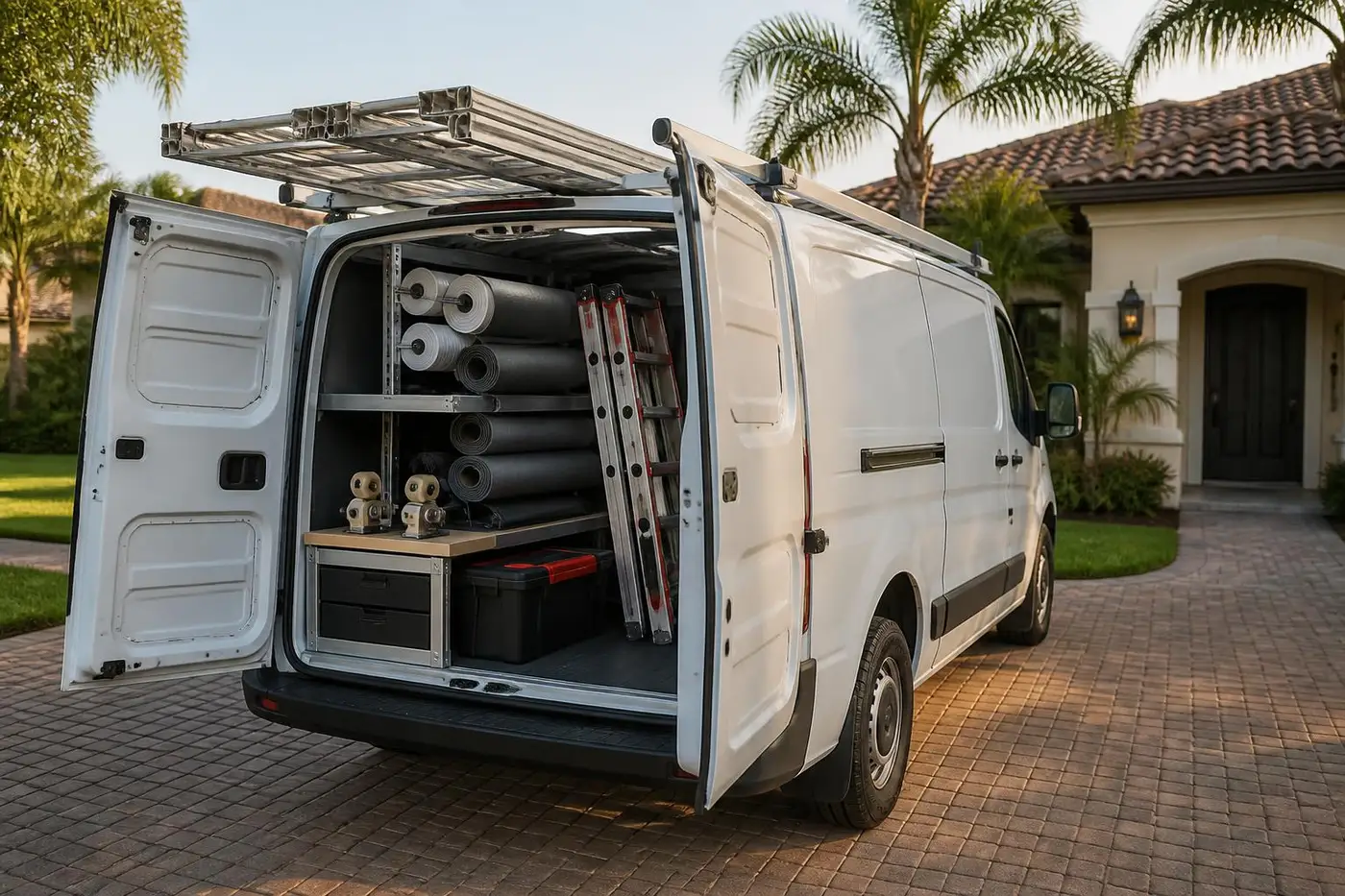
There is no staffed office or showroom to visit. Instead, mobile crews travel to the property where the enclosure actually is, since that's the only place the work can happen anyway. This model keeps the business focused on the field work itself rather than maintaining a retail presence that wouldn't add anything for a service that's inherently on-site.
Communication happens by phone, message, and photos rather than in person at a counter. Customers typically describe the issue, share photos or measurements, and get a general planning range and scheduling window before a crew is sent out, with an on-site look confirming scope once the crew arrives.
Quality standards for spline, mesh, and frame work
Spline work is done by matching the spline size to the existing groove rather than forcing an ill-fitting cord in, since a spline that's too small won't hold tension and one that's too large can crack the frame track. Mesh is selected and tensioned so panels sit flat without excessive sag or drum-tight over-tension that stresses the frame at the corners. Framing repairs address corroded fasteners, loose corner keys, and misaligned door hardware as part of the job when they're contributing to the underlying problem, rather than re-screening over hardware that will just fail again shortly after.
This standard applies whether the visit is a single-panel patch or a larger multi-door project, since a rushed spline job or mismatched mesh tension on a small repair tends to create a callback later just as easily as it would on a bigger one.
Matched spline sizing
Spline diameter is matched to the frame groove so mesh holds proper tension without stressing the track.
Even mesh tension
Panels are screened to sit flat and taut without over-tightening, which reduces long-term stress on corners and frame joints.
Hardware checked, not ignored
Loose fasteners, worn rollers, and misaligned latches are addressed when they're part of why a panel or door failed.
Communication and the estimate process
Getting a useful general planning range starts with a clear description of the damage: which panels or doors are affected, how long the problem has been present, and photos that show both close-up damage and the broader section of enclosure it's part of. From there, the scope gets confirmed either from those photos or during an on-site look, and scheduling is set around weather, since screen installation isn't done in rain or high wind.
Any planning ranges given before a visit are based on typical scope for that kind of damage, and they're treated as a starting point for the conversation rather than a locked-in number, since aluminum framing and hardware issues sometimes only become clear once a technician is looking at the enclosure directly.
Who this work serves
Homeowners with a pool cage or lanai enclosure make up a large share of the work, but the same repair approach applies to HOA and property management contacts coordinating work across multiple units, and to rental property owners who need enclosure issues addressed between tenants or after a storm. Each of these situations tends to come with its own scheduling and communication needs, whether that's coordinating access through a property manager, working around a rental turnover date, or documenting damage for an HOA record.
Where screen work ends and other trades begin
Screen repair covers mesh, spline, screening panels, and the doors and hardware attached to an enclosure. It does not cover structural rebuilding of a damaged frame, roof or footer issues on a pool cage, or electrical and plumbing work sometimes found near an enclosure. When an inspection turns up damage that goes beyond screen scope, such as a frame that has shifted from a structural issue rather than normal wear, that gets flagged plainly rather than patched over, so the homeowner can bring in the right trade for that part of the project.
Working with property managers and repeat properties
For property managers overseeing several rental units or an HOA-managed community, having a documented history of what's been repaired on each enclosure makes future visits faster, since a crew can reference prior spline or panel work instead of re-diagnosing from scratch every time. That kind of continuity is one of the practical benefits of working with the same repair contact over time rather than starting fresh with a new provider each time an issue comes up.
It also helps when scheduling around tenant turnover, since enclosure repairs are often easiest to complete between leases when the unit is unoccupied and access is simpler to arrange. Flagging that kind of timing preference when requesting service tends to make the whole process smoother for everyone involved, including the tenant if the unit is currently occupied.
Consistency across visits also comes down to using the same diagnostic checklist every time: checking spline condition, mesh tension, frame fastener security, and door hardware function as a routine rather than only looking at the specific complaint that prompted the call. That habit occasionally catches a second, unreported issue early, which is generally cheaper to address alongside an existing visit than as a separate future call.
Keep Reading
Explore our screen repair services
Screen Enclosure Repair
Repair torn, loose, and worn enclosure screens without replacing more than your property needs.
Pool Screen & Enclosure Repair
Restore damaged pool screens so your enclosure can keep insects and debris out of the pool area.
Pool Cage Repair & Rescreening
Repair damaged pool cage screens or rescreen aging enclosures when widespread wear makes spot repairs impractical.
Lanai & Patio Screen Repair
Repair torn lanai and patio screens so your covered outdoor space feels comfortable and usable again.
Screen Panel Replacement
Replace damaged screen panels individually when the surrounding enclosure still has useful life.
Screen Door Repair
Repair torn screen doors and common entry-area problems that let insects into your enclosure.
FAQ
Questions About Working With Us
Does Screen Enclosure Repair Jacksonville have a physical office to visit?+
No. It operates as a service-area business with mobile crews that travel to the property, since screen repair work has to happen on-site at the enclosure anyway. All coordination happens by phone, message, or photos rather than at a storefront.
How is scope decided for a repair visit?+
Scope starts with a description and photos of the damage, then gets confirmed on-site once a crew is at the property and can see the panels, spline, and frame directly. This two-step process keeps planning ranges realistic while still allowing for details that only show up in person.
What counts as screen repair work versus a bigger project?+
Screen repair covers mesh, spline, screening panels, and enclosure doors and hardware. Structural frame rebuilding, roof or footer problems on a pool cage, and unrelated electrical or plumbing work fall outside that scope and get flagged rather than worked around.
Can HOAs or property managers request work for multiple units?+
Yes, coordinating enclosure repairs across several units or properties is a common part of the work, and it usually involves more upfront scheduling coordination through the HOA or management contact rather than a single homeowner.
How does spline size affect the quality of a repair?+
Using spline that's matched to the existing frame groove keeps mesh under proper, even tension. Spline that's too small won't hold the mesh securely, and spline that's too large can crack or deform the track over time.
Is mesh tensioned the same way on every panel?+
Mesh is fitted to sit flat and taut without excessive sag, but tensioning also accounts for panel size and frame condition, since over-tightening on an older frame can add unnecessary stress at the corners.
What happens if damage turns out to be structural once a crew arrives?+
That gets communicated directly rather than patched over with a screen repair that won't hold. The homeowner is told what was found so they can bring in a contractor suited to structural or frame rebuilding work.
Do rental property owners get different scheduling options?+
Rental owners often need work coordinated around tenant turnover dates or vacancy windows, and that kind of scheduling flexibility is part of normal coordination when the property isn't owner-occupied.
Ready to get torn or worn screens off your list? Describe the enclosure and the damage, and we will help you plan the next step.
Request an estimate