
Panel-by-panel pool cage rescreening
Pool Cage Rescreening in Jacksonville, FL
Full or partial pool cage rescreening to fix tears, sagging mesh, and sun-damaged panels.
A pool cage takes more abuse than almost any other part of a Jacksonville home. It sits directly in the sun for years at a time, catches every summer storm off the St. Johns River, and gets hosed down with chlorinated pool water and pollen dust in the same season. Eventually the mesh gives out before the aluminum frame does, and that's when rescreening makes more sense than tearing the whole structure down.
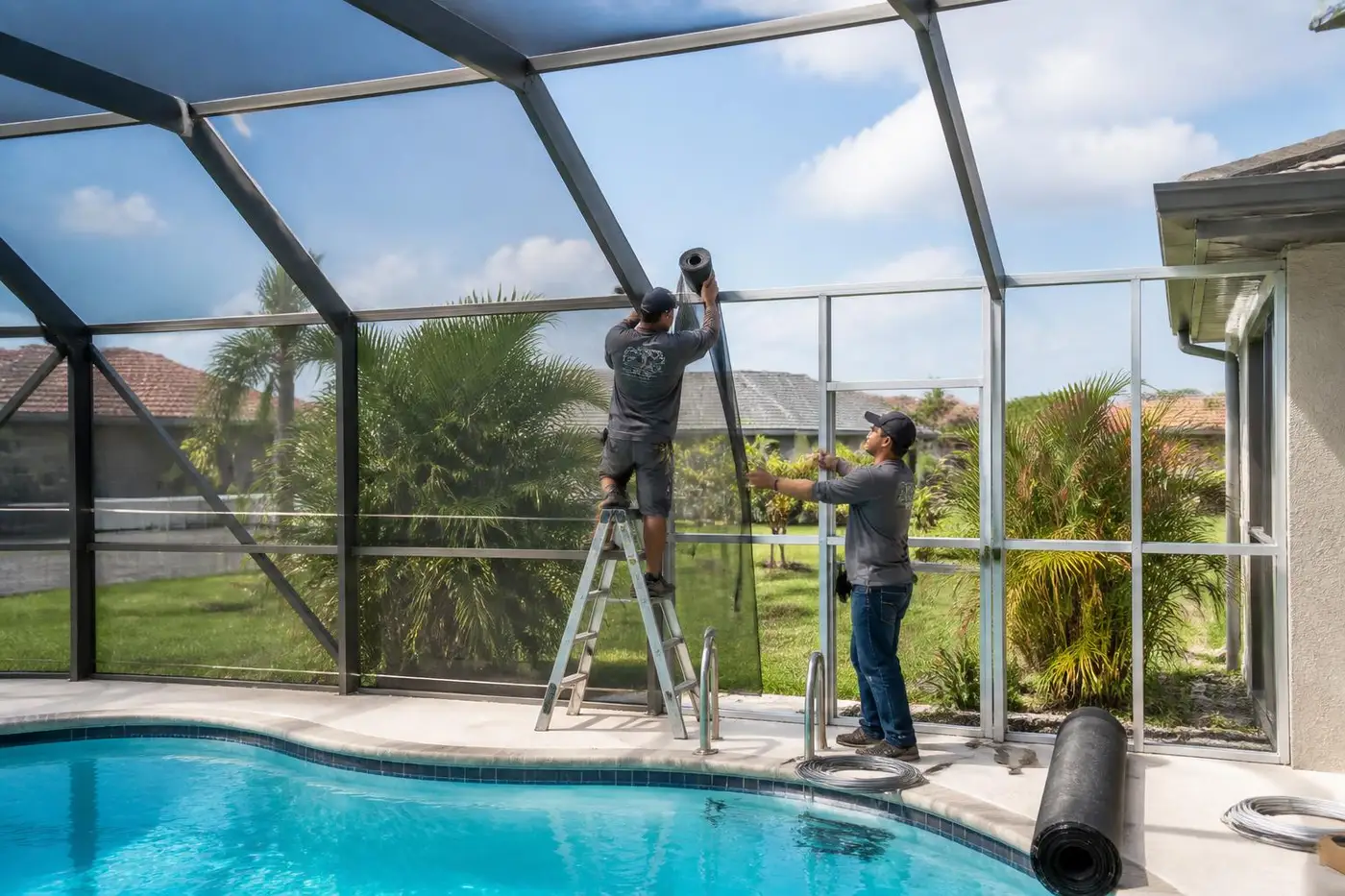
Rescreening a pool cage means stripping the old screen and spline out of the aluminum channel on each panel and installing new mesh, one panel at a time, without touching the frame, footers, or existing permit history unless the frame itself needs attention. It's the middle step between a spot repair and a full enclosure rebuild, and for most Jacksonville pool cages built in the last 20-30 years, it's the right call.
This page walks through what pool cage rescreening actually involves, how to tell if your cage needs it, what mesh options make sense around a pool, and roughly how the job gets priced and scheduled in Northeast Florida.
What Pool Cage Rescreening Involves
Every screen panel on a pool cage is held into its aluminum frame by a rubber or vinyl spline pressed into a groove that runs around the perimeter of the panel. Rescreening means pulling the old spline and torn mesh out of that groove, cutting a new piece of screen slightly oversized, laying it across the opening, and rolling fresh spline back into the groove to lock it in place. The excess mesh gets trimmed flush with a utility knife once the spline is seated.
On a pool cage that's mostly panels between vertical posts, this is straightforward work done from a ladder or lift for the higher runs. The roof panels of a screened pool enclosure are the harder part - they're often steeply pitched or reach 12 to 20 feet up, so a crew needs the right ladders, roof jacks, or a lift to safely reach them without walking on the aluminum ribs, which aren't designed to carry a person's weight.
A full pool cage rescreen replaces every panel, wall and roof, with new mesh at once so the whole structure looks and performs consistently. A partial rescreen targets only the panels that have actually failed, which is common when one side of the cage took storm damage or gets more direct afternoon sun than the rest.
Why Jacksonville Pool Cages Need Rescreening
Standard fiberglass and aluminum screen mesh has a service life, and Jacksonville's climate shortens it compared to cooler, drier parts of the country. UV exposure is the main culprit - screen facing south and west gets baked for years and the fibers become stiff and brittle long before they visibly fail. Once mesh gets brittle, it doesn't take a hurricane to tear it; a errant baseball, a dog jumping at it, or even a hard gust during a regular afternoon thunderstorm can open a hole.
Salt air is a factor for cages closer to the beaches and the Intracoastal, where airborne salt accelerates corrosion on fasteners and can pit spline over time even though the spline itself is usually vinyl. Add in heavy pollen season each spring, which coats mesh in a layer that gets scrubbed with pressure washers more often than most screen can tolerate, and it's easy to see why a pool cage that looked fine five years ago now has sagging or torn panels in several spots.
Hurricane season adds another layer. Even mesh that survives wind loading can get punctured by wind-blown debris - palm fronds, oak limbs, and construction debris from neighboring yards are common culprits after a named storm passes through the area.
Common Signs a Pool Cage Needs Rescreening
Most homeowners notice the problem in one of a few ways: bugs and no-see-ums getting into the pool area despite the screen being intact-looking, mesh that visibly bows or sags between the spline channels, or screen that's turned brittle and chalky to the touch.
Visible tears or holes
Even small holes let in mosquitoes, palmetto bugs, and lizards, and they tend to grow larger with wind movement.
Sagging or ballooning panels
Screen that's stretched loose from UV exposure will bow outward in wind instead of staying taut.
Brittle, discolored mesh
Screen that's gone gray-white and crumbles at the edges has passed the point of spot repair.
Spline pulling out of the track
If spline is dry-rotted or shrunk, panels come loose from the frame even if the mesh itself is still usable.
Repair vs. Full Rescreen: How to Decide
A single small tear in an otherwise sound panel is usually a repair - patch the hole or replace just that panel's mesh. But once three or more panels on the same cage are showing separate problems, it's almost always more cost-effective to rescreen the whole structure in one visit rather than pay for return trips as each additional panel fails over the next year or two.
Age matters as much as damage count. Mesh installed more than 10-12 years ago in a sun-exposed Jacksonville yard is often near the end of its useful life across the board, even where it looks intact today. In that case, doing a full rescreen while the crew and equipment are already on site is usually more economical than repairing panel by panel over several service calls.
The other consideration is the frame itself. If aluminum posts or roof beams are bent, corroded, or pulling away from footers, that's a structural issue that needs to be addressed before or during rescreening, not something new mesh will solve.
Mesh Options for a Pool Enclosure
Standard 18x14 fiberglass mesh is the most common choice for pool cages and works well for general insect control and airflow at a reasonable cost. It's what most Jacksonville pool cages were originally screened with and it's a safe like-for-like replacement.
20x20 no-see-um mesh has a tighter weave and blocks the tiny biting midges that are common near marsh and wetland areas of Northeast Florida, though it reduces airflow slightly and can show more visual density from inside the cage. Pet screen is a heavier, more puncture-resistant mesh worth considering on lower panels if dogs use the pool area regularly. Solar or privacy mesh cuts glare and UV around the pool deck but is denser and changes the look of the enclosure more than standard screen.
18x14 standard fiberglass
Best balance of cost, airflow, and durability for most pool cages.
20x20 no-see-um
Tighter weave for biting insects common near Jacksonville's marshes and waterways.
Pet screen
Reinforced mesh for lower panels where dogs or cats push against the screen.
Solar/privacy mesh
Reduces glare and sun exposure on the pool deck, denser weave.
The Rescreening Process Step by Step
The process starts with an on-site walk of the cage to count panels, note frame condition, and identify which mesh type fits the homeowner's priorities. From there the job generally follows the same sequence on most Jacksonville pool cages.
Old mesh and spline are stripped from each panel being rescreened, and the aluminum spline channel is cleaned out so new spline seats properly. New mesh is cut to size with enough overlap for a clean spline installation, then set in place and rolled into the channel with a spline roller, working from one corner around the panel to keep the screen taut and wrinkle-free. Excess material is trimmed close to the frame. On multi-panel jobs, roof sections are typically done first so any dropped debris falls onto areas that haven't been finished yet, and wall panels are finished last, including door panels which often need spline seated slightly looser to allow for door movement.
Florida Weather Factors That Affect the Job
Rescreening work in Jacksonville has to work around the weather rather than fight it. Afternoon thunderstorms are routine from late spring through early fall, so most rescreening is scheduled for mornings during that stretch of the year. High humidity can also affect how quickly spline seats and how mesh handles - screen that's slightly damp can stretch differently than dry screen, which is one reason experienced crews check forecasts before starting a full rescreen rather than a single panel.
Wind is a practical concern on roof panels especially; large sheets of mesh act like a sail before they're secured, so windy days often push roof work to later in the schedule. Homeowners near the beaches should also expect slightly faster wear on new screen given ongoing salt exposure, which is worth factoring into which mesh weight and fastener type gets used at installation.
Planning the Cost of Pool Cage Rescreening
Pool cage rescreening is generally priced by the panel or by total square footage of mesh, with roof panels costing more per panel than wall panels because of the access equipment and additional labor time involved. A partial rescreen covering a handful of damaged panels will cost less than a full rescreen of every panel on the cage, but a full rescreen often has a better cost-per-panel once labor setup and equipment mobilization are spread across more panels in a single visit.
Mesh choice affects price too - 20x20 no-see-um, pet screen, and privacy mesh all cost more per linear foot than standard 18x14 fiberglass. Cage size, roof height, and how many door panels are involved (doors typically need more careful spline work) also factor into the final number. The most reliable way to get an accurate figure is an in-person walk of the cage, since panel count and access difficulty vary a lot from one Jacksonville property to the next.
Keep Reading
Related services to compare
Fresh mesh with Full Pool Cage Rescreening
Fresh mesh across a panel, a wall, or an entire pool cage, with the screen type matched to how you use the space.
Pool Cage Repair in Jacksonville
Targeted fixes for torn screen, damaged panels, doors, frames, hardware, and storm damage.
Planning Pool Cage Installation
New pool cages, pool enclosures, lanais, screened patios, screen rooms, and custom aluminum structures.
When repair is done: Pool Cage Replacement
Full replacements and rebuilds when an aging or storm-damaged enclosure is past practical repair.
Pool Cage Screen Repair in Jacksonville
Targeted fixes for torn screen, damaged panels, doors, frames, hardware, and storm damage.
Repair option: Pool Cage Frame Repair
Targeted fixes for torn screen, damaged panels, doors, frames, hardware, and storm damage.
Local Coverage
Pool Cage Rescreening across the Jacksonville area
Pool Cage Rescreening in St. Johns
Pool Cage Rescreening in Fruit Cove
Pool Cage Rescreening in Julington Creek
Pool Cage Rescreening in Mandarin
Pool Cage Rescreening in Ponte Vedra Beach
Pool Cage Rescreening in Nocatee
Pool Cage Rescreening in Jacksonville Beach
Pool Cage Rescreening in Orange Park
Pool Cage Rescreening in St. Augustine
Pool Cage Rescreening in Atlantic Beach
Pool Cage Rescreening in Neptune Beach
Pool Cage Rescreening in World Golf Village
Pool Cage Rescreening in Green Cove Springs
Pool Cage Rescreening in Middleburg
Pool Cage Rescreening in Fleming Island
Pool Cage Rescreening in Rivertown
FAQ
Pool Cage Rescreening questions
How long does pool cage rescreening take?+
A typical single-family pool cage with 15-25 panels usually takes one to two days depending on roof height, panel count, and weather. Larger cages or full rescreens with premium mesh can take longer.
Can you rescreen just the roof or just the walls?+
Yes. Many Jacksonville pool cages only need the roof rescreened first since it takes the most direct UV exposure, while wall panels at eye level often hold up longer. A partial rescreen targeting only damaged sections is common.
Will rescreening fix a sagging or leaning cage?+
No. Rescreening replaces the mesh and spline in the existing frame. If posts are bent, footers are loose, or the frame has structural movement, that needs separate attention before or alongside rescreening.
What mesh do you recommend for a pool cage near the beach?+
Standard 18x14 fiberglass still works well, but many beachside homeowners choose it paired with stainless or coated fasteners given the faster corrosion rate from salt air. Mesh type itself doesn't need to change for coastal exposure.
Do I need a permit to rescreen my pool cage?+
Rescreening existing panels in an existing frame typically doesn't trigger new permitting since the structure itself isn't being altered. If frame repairs or structural changes are needed alongside rescreening, that can be a different situation worth discussing on site.
How soon can rescreening happen after storm damage?+
It depends on the extent of damage and scheduling demand right after a storm, since many Jacksonville cages get hit at once during hurricane season. Calling as soon as damage is noticed helps get on the schedule sooner rather than waiting.
Does new screen come with any protection built in?+
New mesh is simply new material properly installed with fresh spline; it doesn't come with special coatings beyond what the mesh type itself provides (standard, no-see-um, pet, or solar/privacy).
Call (904) 853-3510 for a free on-site estimate on rescreening your pool cage.
Request an estimate