Pool panel and mesh specialists
Pool Screen Repair in Jacksonville, FL
Re-screening and panel repair to keep bugs and debris out of your Jacksonville pool.
Pool screen repair is specifically about the mesh panels surrounding your pool - the material that keeps leaves, palmetto bugs, mosquitoes, and no-see-ums out of the water while still letting in light and air. In Jacksonville, that screen sits directly over chlorinated or saltwater pool water and gets hit with pool chemical off-gassing, constant sun reflecting off the water's surface, and the humidity that comes with living near the water year-round, so it tends to wear out faster than screen elsewhere on the property.
When pool screen fails, it's rarely subtle. You'll notice frogs and lizards getting in, leaves piling up in the skimmer faster than usual, or a visible hole growing at the corner of a panel where a pet or a stray branch caught it. We focus this service specifically on the screen and spline work around the pool, distinct from structural cage repair, though we'll flag frame issues if we spot them during the job.
We repair pool screens for homes across Jacksonville, from older pool cages on the Southside to newer construction out toward St. Johns County.
What Pool Screen Repair Covers
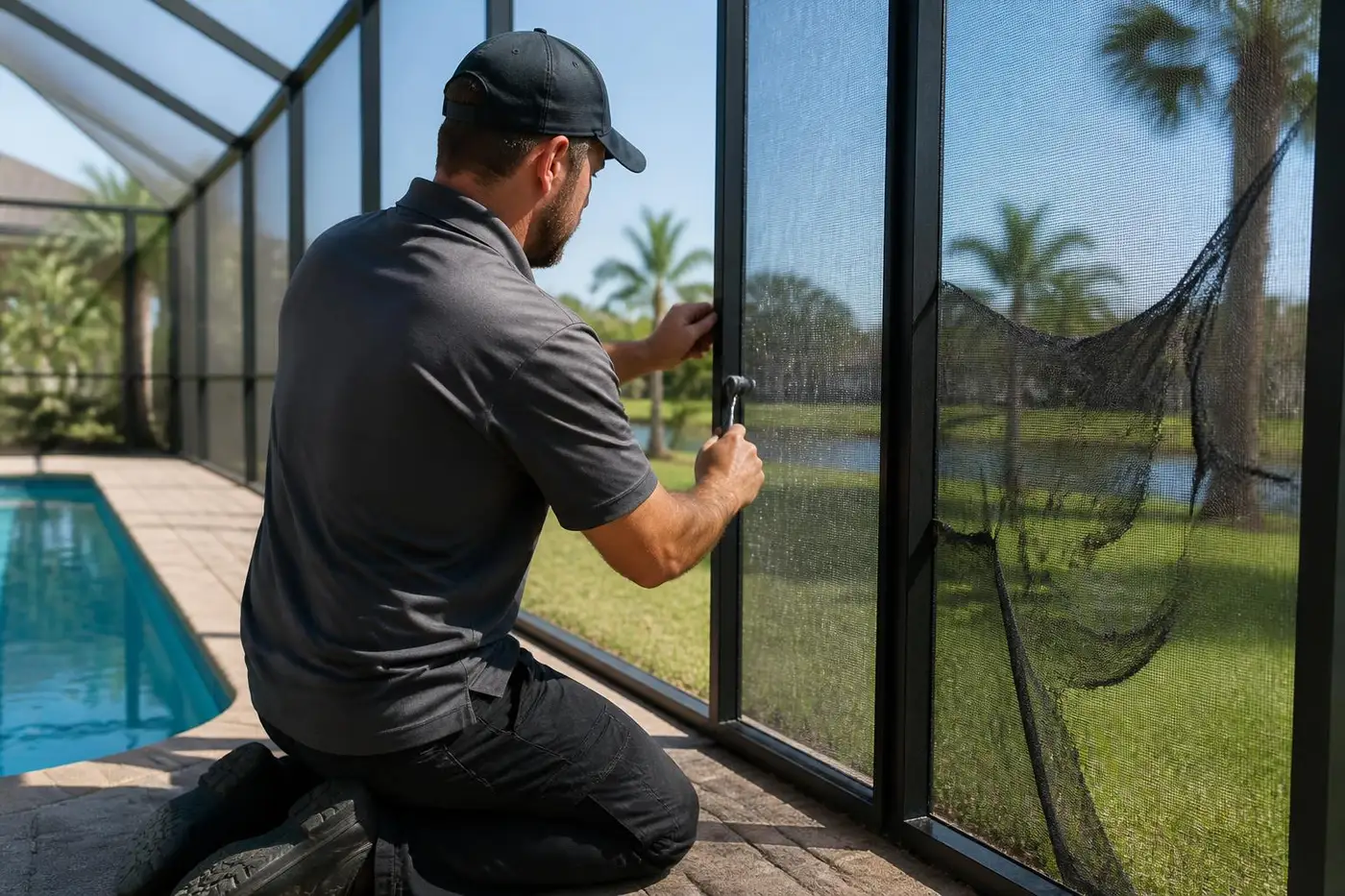
This service is centered on the screen panels themselves: removing old, torn, or discolored mesh, re-cutting and stretching new mesh across the panel frame, and rolling in new spline to lock it into the channel. We also address loose or popped spline on panels where the screen is otherwise fine but has come loose from vibration or age.
If a panel has ballooned outward from wind pressure or sagged from repeated rain pooling on it, re-tensioning during the re-screen usually resolves it, provided the panel frame itself isn't bent.
Why Pool Screens Wear Out Faster in Jacksonville
Screen directly over a pool deals with a tougher environment than screen elsewhere on an enclosure. Sunlight reflects off the pool surface and hits the underside of the mesh as well as the top, roughly doubling UV exposure on those panels. Pool chemicals, whether chlorine or salt system output, drift upward in fine mist and settle on the screen, contributing to material breakdown over time. Add in Jacksonville's humidity and the intense rain of a typical summer storm season, and pool screen panels often need attention years before the rest of the enclosure does.
Signs Your Pool Screen Needs Repair
Watch for small holes near the bottom of panels (common entry points for lizards and frogs), screen that looks faded, chalky, or brittle to the touch, visible sagging or bagging in panels after rain, and debris accumulating in the pool faster than it used to. Torn screen near doors is especially common since that's the highest-traffic area of any pool cage.
Pinholes and small tears
Often near the base, these let in insects and small wildlife before they're obviously visible from a distance.
Sagging or bagging panels
Loose spline or overstretched mesh lets rain pool on screen instead of running off.
Chalky or brittle screen
A sign of UV breakdown that means the panel will keep tearing even after a small patch.
Repair vs. Full Re-Screen
A single small tear on an otherwise sound panel can sometimes be patched, but patches are a short-term fix and rarely match the surrounding screen visually. Once a panel shows multiple tears, chalky discoloration, or brittleness, a full re-screen of that panel is the more durable choice. If most of the panels around the pool are the same age and showing similar wear, it's often more cost-effective to re-screen the whole pool area in one visit rather than coming back panel by panel over the following seasons.
On cages that take repeated wind load or sit near a screened door people use daily, we often recommend heavy-duty pool screen replacement instead of standard mesh, paired with pool cage reinforcement at the corners that flex the most.
Mesh Choices for Pool Areas
Standard 18x14 fiberglass mesh is the typical choice for pool screen and holds up well for the price. Many Jacksonville homeowners near the coast or in areas with heavy no-see-um activity upgrade to 20x20 no-see-um mesh around the pool specifically, since that's where bugs matter most in the evening. Pet screen is a durable, tear-resistant option for households with dogs that like to lean or scratch at lower panels near the pool deck. Solar or privacy mesh is less common on pool panels since it reduces the view of the water, but some homeowners use it on side panels facing a neighbor's yard.
Screened areas that double as pet runs do better with pet-resistant screen, and homes near marsh or water usually prefer no-see-um screen over standard 18x14 fiberglass.
How the Repair Process Works
We inspect the pool cage panel by panel to identify which need full re-screening versus simple spline tightening. Old mesh is stripped from the frame, new mesh is cut oversized and laid across the panel, and a spline roller presses new spline into the channel to lock the screen in tight and even. Excess mesh is trimmed clean along the edge. We check doors last, since door panels see the most flexing and are often the first to need repair again.
While panels are off, it's the easiest time to address hardware: we check every connection and flag anything needing rusted fastener replacement or pool cage screw replacement, and note whether the frame would benefit from pool cage painting before new mesh goes back in.
Weather Considerations
We schedule around Jacksonville's weather patterns where possible, avoiding days with heavy rain that make it hard to get a clean, tight re-screen, and being mindful of pollen season in the spring when fresh screen can get coated with pollen within days if application timing isn't considered. Hurricane season prep is also common - homeowners often get panels re-screened proactively before storm season rather than dealing with storm-driven tears afterward.
Planning for Cost
Cost depends on the number of panels needing new mesh, the mesh type selected, and whether it's a handful of panels or a full re-screen of the pool area. No-see-um and pet screen cost more per panel than standard fiberglass. We give a free, in-person estimate so you know the actual cost for your pool cage before any work starts.
Keep Reading
Related services to compare
Fix it first: Pool Cage Repair
Targeted fixes for torn screen, damaged panels, doors, frames, hardware, and storm damage.
Pool Enclosure Repair in Jacksonville
Targeted fixes for torn screen, damaged panels, doors, frames, hardware, and storm damage.
Repair option: Pool Screen Enclosure Repair
Targeted fixes for torn screen, damaged panels, doors, frames, hardware, and storm damage.
Fresh mesh with Pool Cage Rescreening
Fresh mesh across a panel, a wall, or an entire pool cage, with the screen type matched to how you use the space.
Pool Cage Installation for Jacksonville homes
New pool cages, pool enclosures, lanais, screened patios, screen rooms, and custom aluminum structures.
Planning Pool Enclosure Installation
New pool cages, pool enclosures, lanais, screened patios, screen rooms, and custom aluminum structures.
Local Coverage
Pool Screen Repair across the Jacksonville area
Pool Screen Repair in St. Johns
Pool Screen Repair in Fruit Cove
Pool Screen Repair in Julington Creek
Pool Screen Repair in Mandarin
Pool Screen Repair in Ponte Vedra Beach
Pool Screen Repair in Nocatee
Pool Screen Repair in Jacksonville Beach
Pool Screen Repair in Orange Park
Pool Screen Repair in St. Augustine
Pool Screen Repair in Atlantic Beach
Pool Screen Repair in Neptune Beach
Pool Screen Repair in World Golf Village
Pool Screen Repair in Green Cove Springs
Pool Screen Repair in Middleburg
Pool Screen Repair in Fleming Island
Pool Screen Repair in Rivertown
FAQ
Pool Screen Repair questions
How do I know if my pool screen needs a patch or a full re-screen?+
A single small, isolated tear on otherwise sound mesh can sometimes be patched. Multiple tears, chalky or brittle screen, or fading usually call for a full panel re-screen.
What mesh do you recommend for pool areas?+
Standard 18x14 fiberglass works well for most pools. If no-see-ums are a problem in your area, 20x20 no-see-um mesh is a popular upgrade for panels around the pool.
Will re-screening around my pool disrupt pool use?+
We work around the panels being repaired and typically don't need to interrupt pool access, though we ask that the immediate work area stay clear while we're screening.
Why does my pool screen wear out faster than the rest of my enclosure?+
Screen over the pool gets extra UV exposure from sunlight reflecting off the water, plus exposure to pool chemical mist, both of which speed up mesh breakdown.
Can you match new screen panels to the rest of my existing enclosure?+
Yes, we use standard mesh colors and types that blend with existing panels so the repair doesn't stand out.
Do you repair pool screen doors too?+
Yes, door panels see the most use and are a common repair point; we re-screen and re-hang doors as part of pool screen repair.
Call (904) 853-3510 for a free estimate on pool screen repair.
Request an estimate