Panel-by-panel screen repair
Screen Panel Replacement in Jacksonville, FL
Individual screen panel replacement for lanais and enclosures across Jacksonville, matched to your existing mesh.
A single bad screen panel can undo the whole point of a pool cage or lanai enclosure. Once one panel blows out of its spline groove or a branch tears through the mesh, bugs, pollen, and wind-driven rain start finding their way in through that one weak spot, even if every other panel around it is holding fine.
Screen panel replacement is the targeted fix for that problem. Instead of rescreening an entire enclosure, we pull the spline on the damaged panel or panels, cut new mesh to size, and re-roll it into the aluminum channel so it sits tight and even with the surrounding panels. Most homes in Jacksonville only need a handful of panels replaced at a time, usually the ones facing prevailing wind, afternoon sun, or a nearby tree line.
We work on pool cages, lanai screens, front entry screen doors, and patio enclosures throughout Northeast Florida, matching mesh type and color so the repaired panels don't stand out from the rest of the structure.
Whether the damage came from a storm, a curious pet, or simple age, getting a panel replaced quickly matters more than it might seem. Left open, even a small tear lets in enough bugs and debris that homeowners often end up avoiding their own lanai until it's fixed, and a small tear left alone tends to grow larger with every windy afternoon.
What Screen Panel Replacement Actually Involves
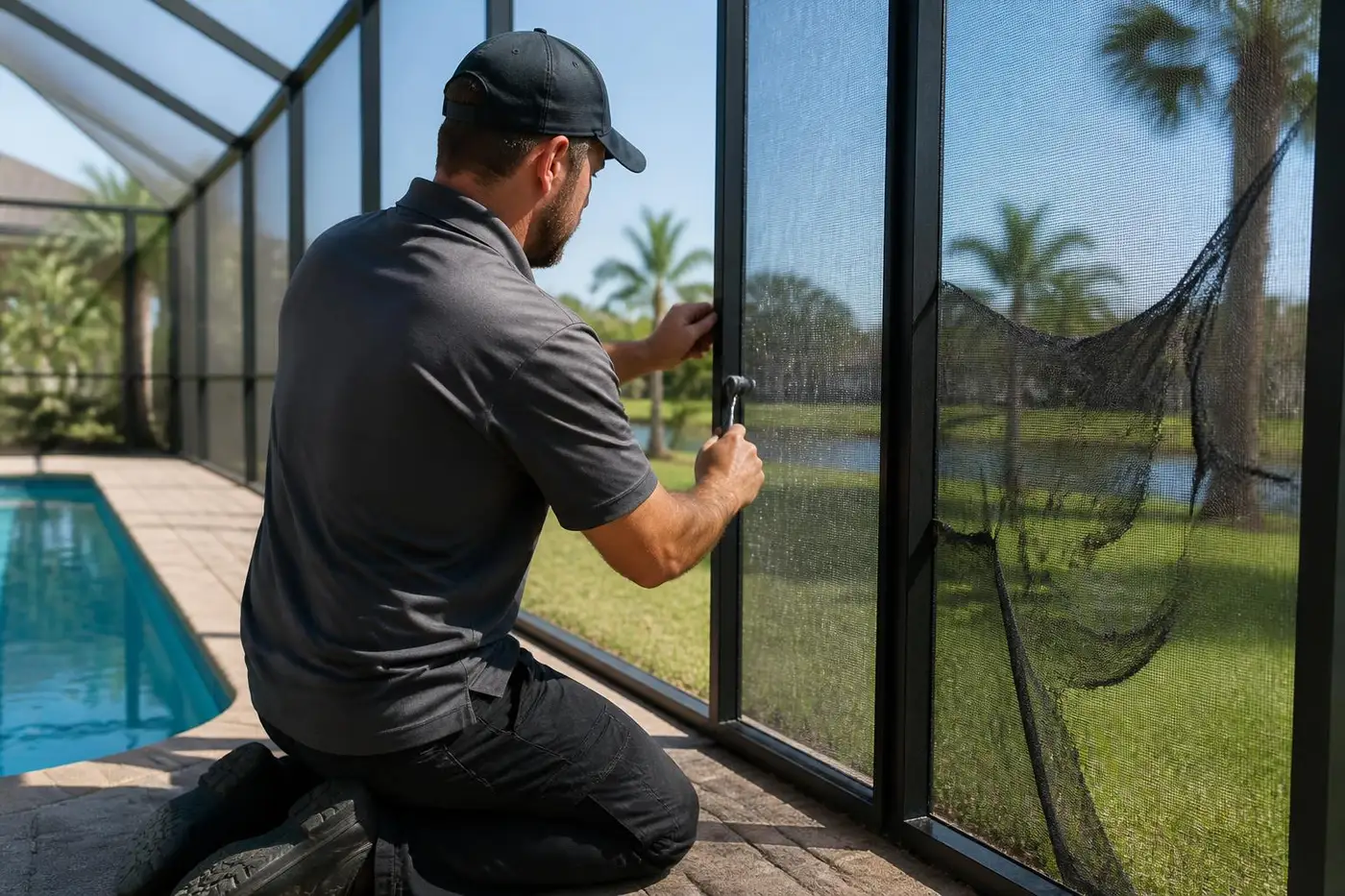
Every screen panel is mesh held into an aluminum frame by a rubber spline pressed into a groove that runs around the panel's perimeter. Replacement means removing the old spline and stretched or torn mesh, cutting fresh screen material with a couple of inches of overlap, and rolling new spline over it with a spline roller to lock it in place.
It sounds simple, and for a single panel on a screen door it often is a same-visit job. On a two-story pool cage, panel replacement can mean working off a ladder or a lift at height, checking that the aluminum frame member itself is not bent or corroded before we re-screen it, and confirming the panel still meets the spacing the frame was built for.
Spot repair
Only the damaged panel or panels are pulled and re-screened; surrounding panels are left untouched.
Frame check
We inspect the aluminum extrusion and corner keys for bends or rust before re-screening.
Matched materials
New mesh is matched to the existing screen type so patched panels blend in.
Why Jacksonville Homes Go Through Panels Fast
Jacksonville's climate is hard on screen mesh in ways that don't show up in cooler, drier states. UV exposure through most of the year breaks down the polymer coating on fiberglass and vinyl-coated screen, making it brittle years before it would fail up north. Add in salt air if you're anywhere near the Beaches, Mandarin's oak canopy dropping limbs and acorns, and the general rate of afternoon thunderstorms from June through September, and it's common for a handful of panels to fail well before the rest of the enclosure needs attention.
Wildlife is another factor we see constantly: squirrels, raccoons, and birds test screens at seams and corners, and once there's a small tear, wind pressure during a storm finishes the job by peeling the panel out of its spline groove.
Common Signs a Panel Needs Replacing
Most homeowners call us after noticing one obvious tear, but panel damage often starts smaller and gets missed. Loose or sagging mesh that bows outward when you press on it usually means the spline has already started working its way out of the groove, even if the screen itself isn't torn yet.
Visible tears or holes
Any opening larger than a coin will keep growing under wind load.
Sagging or bagging mesh
Screen that bows in or out has lost tension and the spline is likely failing.
Spline pulling out at corners
Corners take the most stress and are usually the first place spline lets go.
Discoloration or brittleness
Chalky, faded mesh that cracks when flexed is past its UV life and due for replacement.
Panel Replacement vs. Full Rescreen
If only one or two panels are damaged and the rest of the screen still has good tension and color, replacing just those panels is the more economical call and keeps the rest of your enclosure's screen life intact. But if you're finding new tears every season, or the mesh throughout the cage looks uniformly faded and brittle, that's usually a sign the whole enclosure is nearing the end of its screen life at the same time, and a full rescreen makes more sense than replacing panels one at a time indefinitely.
We'll tell you honestly which situation you're in during the estimate. There's no reason to rescreen an entire pool cage when three panels on the west-facing side are the only ones that took storm damage.
Mesh Options for Replacement Panels
Standard 18x14 fiberglass screen is the most common mesh in Jacksonville enclosures and is what most replacement panels use unless you tell us otherwise. If bugs like no-see-ums are a recurring problem on your property, we can upgrade individual panels to 20x20 no-see-um mesh, though it does reduce airflow slightly. Pet owners dealing with a dog or cat that scratches at screens can request pet-resistant mesh for lower panels, and homeowners wanting more shade or privacy on a west-facing wall can go with solar or privacy screen instead of standard clear-view mesh.
Our Panel Replacement Process
We start with an on-site look at every panel you're concerned about, plus a quick check of neighboring panels since damage often isn't limited to the one you noticed. From there we remove the old spline and mesh, clean out the groove, cut new screen material to size with allowance for tensioning, and roll new spline in with even pressure so the panel sits drum-tight with no wrinkles or ripples.
For panels that are hard to reach, like second-story pool cage sections, we bring the appropriate ladder or lift setup rather than trying to reach across from an adjacent panel, which is how frames get bent.
Florida Weather and Panel Longevity
Sun exposure is the single biggest factor in how long a screen panel lasts here. South- and west-facing panels typically fail years before north-facing ones on the same structure simply because they take more direct UV. Humidity and pollen season add a film to the mesh that, combined with UV breakdown, makes screen brittle enough to tear from something as minor as a rake handle brushing against it. During hurricane season, even panels that survive the storm itself can come away from their spline afterward if wind pressure stretched the groove.
If you're near the coast, salt air accelerates corrosion on any exposed fasteners or corner keys, which is why we check those components any time we're already replacing a panel.
Planning for Cost
Panel replacement pricing depends mainly on how many panels need work, how accessible they are, and which mesh type you choose. A single ground-level door panel is a quick, low-cost repair, while multiple upper-level pool cage panels needing a lift will cost more due to access alone. Upgrading to no-see-um or solar mesh adds a modest per-panel premium over standard fiberglass screen. We'll walk the property with you and give you a clear estimate before any work starts, broken out by panel if that's helpful for budgeting.
Preventing Repeat Panel Failures
Once we've replaced a panel, there are a few habits that help it last. Keeping tree limbs trimmed back from the enclosure reduces the chance of a branch tearing new mesh the same way it damaged the old panel. Rinsing pollen and salt film off screens a few times a year with a soft brush and garden hose, rather than a pressure washer, also helps the mesh keep its flexibility longer instead of turning brittle prematurely.
If a particular panel keeps failing repeatedly, it's often worth upgrading that specific spot to a heavier mesh or double-checking that the frame member around it isn't slightly bent, which puts uneven stress on the screen every time wind pushes against it.
Working Around Pool Cages and Screened Lanais Safely
Replacing panels on a two-story pool cage or a lanai with a steep pitch roofline over it takes more than just spline and mesh; it takes the right ladder setup or lift, and a plan for reaching each damaged panel without leaning on or through adjacent screens that are still in good shape. We bring the right equipment for the specific height and layout instead of improvising, which keeps the rest of your enclosure's screens from getting damaged during the repair itself.
For homes with pools, we also take care to keep debris, old mesh scraps, and spline off the pool deck and out of the water during the work, cleaning up thoroughly before we consider the job finished.
Service Guide
What panel replacement actually involves
Screen panel replacement means removing the old mesh and spline from an aluminum frame section, then installing new mesh and fresh spline to hold it taut in the groove. This is different from a small patch repair, which covers a hole without addressing the whole panel, and it's different from reframing, which involves replacing bent or damaged aluminum extrusions themselves. Panel replacement is the right scope when the mesh has failed — through tearing, stretching, or UV brittleness — but the aluminum frame around it is still straight and structurally sound.
Because the frame is reused, panel replacement is generally faster and less costly than any repair that also requires new framing, which is one reason it's the most common screen repair performed on both porches and lanai cages.
Signs a panel needs full replacement rather than a patch
A patch can extend the life of a screen with a single small puncture, but certain conditions call for replacing the whole panel instead. Mesh that has gone chalky or brittle from UV exposure will keep tearing near any patch, so replacement is more reliable. A panel with multiple tears, a sagging or rippled surface, or spline that no longer grips along most of its length is also a better candidate for full replacement than for spot repair.
Widespread UV brittleness
Mesh that crumbles or cracks when flexed has lost its structural integrity across the whole panel, not just at the visible damage point.
Multiple tears or holes
Once a panel has several separate damage points, patching each one is more labor than replacing the mesh outright.
Persistent sag despite re-tensioning
If pulling the spline tighter doesn't restore a taut panel, the mesh itself has stretched beyond usable tension.
Spline groove no longer holding
A worn or oversized groove that won't grip new spline may need a slightly larger spline diameter along with the mesh replacement.
Choosing mesh for a replacement panel
Panel replacement is a natural point to upgrade mesh type rather than simply putting back what failed. Standard fiberglass mesh remains the most economical option and performs well for general porch and patio use. Pet-resistant mesh, a heavier vinyl-coated weave, is worth the upgrade cost for panels at ground level or near doors where pets make regular contact with the screen.
No-see-um mesh has a tighter weave that blocks small biting insects but reduces airflow slightly compared to standard mesh, so it's best reserved for panels where insect control matters most, like near seating areas used at dusk. Solar and shade screens cut glare and heat on sun-facing panels and are commonly chosen for west-facing walls of a pool cage or patio enclosure, though they reduce visibility more than standard mesh.
Spline size, fasteners, and getting the tension right
Spline comes in a range of diameters, and matching it to the groove width on your specific frame extrusion is what keeps a new panel taut for years instead of loosening within months. Using spline that's too small for the groove is one of the most common causes of a repair that looks fine on installation day but sags again within a season.
Correct tension during installation also matters: mesh pulled too tight can distort or tear at the corners under thermal expansion, while mesh installed too loose will ripple and collect debris. A properly replaced panel should sit flat and evenly tensioned across its whole surface without straining the frame corners.
Frame condition and when replacement isn't enough on its own
Panel replacement assumes the aluminum frame around the mesh is still straight and the corners are square. If a frame section has been bent — from a storm, an impact, or age — new mesh installed into a warped frame won't sit correctly no matter how well it's tensioned, and it will likely fail again sooner. In that case the framing needs to be straightened or replaced before new mesh goes in.
It's worth having the frame checked at the same time as the mesh, particularly after any storm event or if the panel in question has failed more than once in a short period, since a repeat failure at the same location often points to an underlying frame issue rather than the mesh itself.
Planning ranges and what affects panel replacement cost
Cost for panel replacement scales with panel size, height, mesh type, and how many panels are being done in the same visit — doing several panels together is typically more efficient than scheduling separate visits for each one. Upgraded mesh like pet-resistant or solar screen carries a higher material cost per panel than standard fiberglass, which should factor into planning if you're replacing panels across a whole porch or cage.
Access also affects cost: panels reachable from ground level are quicker to replace than second-story screens or tall pool cage panels that require ladders or lifts. Getting a specific look at your panels is the most reliable way to plan, since a general range can vary a good deal based on these factors.
Keep Reading
Related services to compare
When repair is done: Screen Enclosure Replacement
Full replacements and rebuilds when an aging or storm-damaged enclosure is past practical repair.
Pool Cage Replacement explained
Full replacements and rebuilds when an aging or storm-damaged enclosure is past practical repair.
Rescreen route: Patio Screen Replacement
Fresh mesh across a panel, a wall, or an entire pool cage, with the screen type matched to how you use the space.
Fresh mesh with Screen Mesh Replacement
Fresh mesh across a panel, a wall, or an entire pool cage, with the screen type matched to how you use the space.
Pool Screen Replacement for worn screen
Fresh mesh across a panel, a wall, or an entire pool cage, with the screen type matched to how you use the space.
Full rebuild: Pool Enclosure Replacement
Full replacements and rebuilds when an aging or storm-damaged enclosure is past practical repair.
Local Coverage
Screen Panel Replacement across the Jacksonville area
Screen Panel Replacement in St. Johns
Screen Panel Replacement in Fruit Cove
Screen Panel Replacement in Julington Creek
Screen Panel Replacement in Mandarin
Screen Panel Replacement in Ponte Vedra Beach
Screen Panel Replacement in Nocatee
Screen Panel Replacement in Jacksonville Beach
Screen Panel Replacement in Orange Park
Screen Panel Replacement in St. Augustine
Screen Panel Replacement in Atlantic Beach
Screen Panel Replacement in Neptune Beach
Screen Panel Replacement in World Golf Village
Screen Panel Replacement in Green Cove Springs
Screen Panel Replacement in Middleburg
Screen Panel Replacement in Fleming Island
Screen Panel Replacement in Rivertown
FAQ
Screen Panel Replacement questions
Can you replace just one screen panel, or do you have to redo the whole enclosure?+
We replace individual panels all the time. If the rest of your screen is in good shape, there's no need to rescreen the whole structure.
How long does replacing a few panels take?+
A handful of ground-level panels is often finished same-day. Higher or harder-to-reach panels on a pool cage may take longer depending on access.
Will the new panel match my existing screen?+
We match mesh type and color as closely as possible so the replaced panel blends in with the rest of the enclosure.
Do you offer no-see-um or pet screen for replacement panels?+
Yes, we can upgrade individual panels to 20x20 no-see-um mesh, pet-resistant screen, or solar/privacy mesh depending on your needs.
What causes screen panels to fail in Jacksonville specifically?+
UV exposure, salt air near the coast, storm wind, pollen buildup, and wildlife are the main culprits we see on local enclosures.
How do I know if I need a panel replaced or the whole screen redone?+
If damage is isolated to a few panels and the rest of the mesh still has good tension and color, panel replacement is usually the right call. Uniform fading or repeated tears across the enclosure points to a full rescreen instead.
Do you check the aluminum frame when replacing a panel?+
Yes, we look at the extrusion and corner keys for bends or corrosion before installing new mesh, since a damaged frame can cause the new panel to fail early too.
Call for a free, no-pressure estimate on replacing the screen panels giving you trouble.
Request an estimate