
Full Pool Cage Rebuild
Pool Cage Replacement in Jacksonville, FL
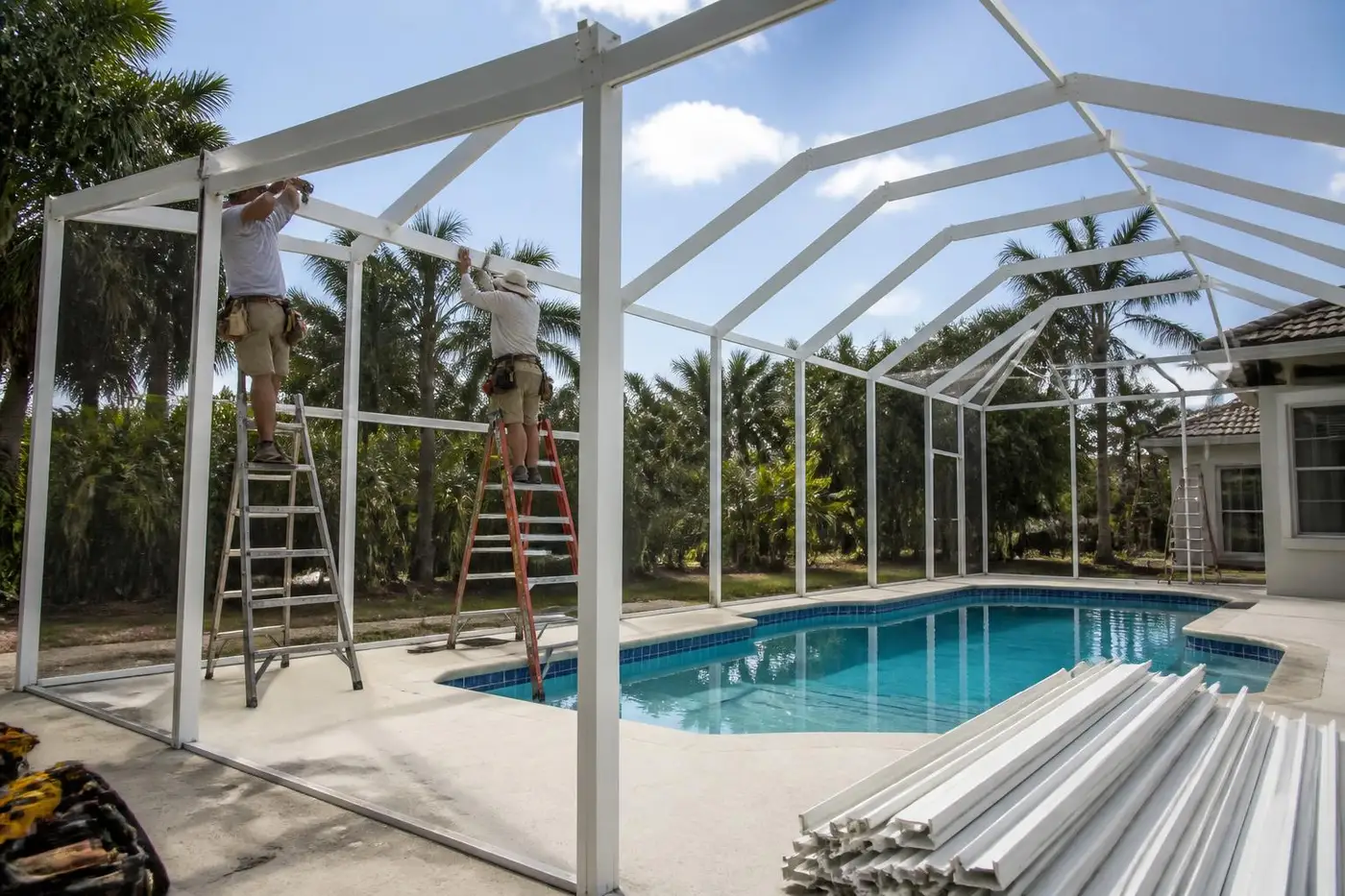
Complete pool cage teardown and rebuild for Jacksonville homes where the frame has outlived the screen.
A pool cage replacement is a full teardown and rebuild of the aluminum superstructure that screens in a pool area - not just fresh mesh on the same frame, and not a spot repair on a bent panel. It's the option we recommend when the structure itself, not just the screen, has reached the end of its service life: corroded uprights, a bowed roof panel, a base track pulling away from the pool deck, or storm damage spread across multiple sections.
Jacksonville's pool cages take a particular kind of beating. They sit over standing water and wet deck surfaces for months at a time, get direct sun for most daylight hours, and in coastal and Intracoastal neighborhoods take on salt-laden air that accelerates corrosion at every fastener point. Add hurricane season wind loads on a tall superstructure with a lot of surface area, and it's not unusual for a pool cage to need full replacement well before the rest of the home's exterior does.
This page covers how we evaluate a pool cage for replacement, the difference between a partial rebuild and full teardown, what changes when an older cage is rebuilt to current wind load standards, and how insurance documentation typically factors into a storm-related replacement.
Signs Your Pool Cage Needs Replacement, Not Just Repair
The tell is usually in the aluminum, not the mesh. Screen tears and even a bent panel or two are normal wear and fixable with a repair. What pushes a job into replacement territory is structural: corrosion eating into extrusion at screw holes, a superstructure that has visibly bowed or leans off plumb, a base track separated from the pool deck in more than one spot, or a roof ridge that has sagged.
Pool cages also see a specific corrosion pattern that flat screen porches don't: pool chemicals in the air (chlorine or salt-system byproducts) combine with humidity to attack aluminum and fasteners near the water line faster than elsewhere on the structure. If you're noticing white powdery corrosion (aluminum oxide) building up at panel joints near the pool, that's usually a sign the frame's service life is running out, not just a cosmetic issue to hose off.
Repair territory
A few torn screen panels, one loose or bent screen frame member, minor spline failure
Replacement territory
Corrosion at multiple upright bases, a leaning or racked superstructure, separated base track, sagging roof ridge
Partial Rebuild vs. Full Teardown on a Pool Cage
A partial rebuild replaces one compromised section - often the roof, since it takes the most sun and wind load - while keeping sound wall panels and the existing footers. This can work well when corrosion or damage is genuinely contained, and it costs less than starting over. But a pool cage is one connected structure, so we're careful to confirm the sections being kept are actually load-bearing sound, not just intact-looking.
A full teardown removes the entire superstructure down to the deck anchors and rebuilds on the same footprint. We lean toward this when corrosion is present at multiple points around the cage, when the existing structure doesn't meet current wind load engineering for the property, or when the homeowner wants to change the roof pitch, add a super gutter for better drainage, or reconfigure access doors - changes that are difficult to execute cleanly on a partial rebuild.
What Changes When an Older Pool Cage Is Rebuilt to Current Code
Pool cages built in the 1990s or early 2000s were engineered to older wind load standards, and Florida Building Code has tightened those requirements since, particularly for taller superstructures like pool cages that catch more wind than a flat screen porch. Rebuilding one today typically means heavier gauge aluminum on the uprights and roof structure, engineered anchor spacing at the deck, and in most jurisdictions a permit with engineered drawings before work starts.
Homeowners sometimes expect the rebuilt cage to look identical to what came down; in practice the new structure is usually a bit more robust-looking because of the heavier extrusion, and hardware will be consistent stainless steel or coated fasteners rather than the mixed hardware that tends to accumulate over years of ad hoc repairs. It's a worthwhile tradeoff since it's the wind load engineering, more than the mesh, that determines how the cage performs in the next tropical storm or hurricane.
Mesh and Frame Choices for a Replacement Pool Cage
Frame extrusion is sized to the engineering required for your cage's height and the property's wind exposure category - taller cages and homes closer to open water generally need heavier framing. Bronze and white are the standard finish choices in Northeast Florida.
For screen, 18x14 fiberglass mesh is standard and lets in the most light and airflow around the pool. Solar or privacy mesh cuts glare and afternoon heat gain, which matters more on a pool cage than almost any other enclosure type, but it does reduce airflow and can make the pool area feel warmer in still conditions. No-see-um mesh is worth considering for homes near marsh or wetland areas where biting gnats are a seasonal nuisance, though it further restricts airflow. We walk through these tradeoffs against your specific pool orientation and sun exposure rather than defaulting to one mesh for the whole cage.
The Pool Cage Replacement Process
The sequence starts with a site evaluation of the existing structure, deck anchors, and pool equipment clearances, followed by engineering and permitting for jobs that require it. Teardown removes the old superstructure and screen; we then inspect and, where needed, repair the deck anchor points before assembling new framing on site. Mesh installation with spline and door hardware alignment finish out the job, followed by a walkthrough.
Because pool cages are taller and often larger in footprint than a typical screen porch, and because most full replacements require permitting, plan on several weeks from signed estimate to completed install, with plan review time typically the longest single stretch rather than the physical construction.
Insurance Claims and Documentation for Storm-Damaged Pool Cages
When a pool cage replacement follows storm damage, insurers typically want documentation: dated photos of the damage, a written scope of work, and an itemized estimate describing materials and labor. We can provide photos taken during our site visit and a detailed written estimate you can submit to your adjuster, but we can't tell you what your specific policy covers or guarantee a claim outcome - that's between you and your insurance company.
It's worth photographing the damage yourself as soon as it's safe to do so, before any tarping or temporary repairs, since adjusters generally want to see the as-damaged condition. Keep any correspondence with your insurer, and get our written estimate into that file as early in the claims process as you can.
Florida Weather Factors Specific to Pool Cages
Pool cages face a combination that flat enclosures don't: constant humidity off the water surface, chemical exposure from pool treatment, direct sun for most of the day, and, in hurricane season, wind loads acting on a tall structure with substantial surface area. Salt air near the beaches and Intracoastal accelerates all of this, and pollen season adds a seasonal maintenance factor even though it doesn't drive replacement decisions the way corrosion and storm damage do.
Planning the Cost of a Pool Cage Replacement
Pool cage replacements generally cost more than flat screen enclosure replacements of similar footprint, mainly because of the taller superstructure, more engineering-intensive roof structure, and typically stricter permitting given the wind exposure of a raised cage. Cost drivers include overall size and roof height, wind load engineering requirements, mesh grade, and the condition of existing deck anchors.
As with any full replacement, we only provide firm numbers after seeing the cage in person, since identical-looking cages can price very differently based on frame condition and site access. A free written estimate is the right starting point for planning purposes.
Keep Reading
Related services to compare
Extend its life with Pool Cage Door Replacement
Doors, reinforcement, fasteners, painting, and restoration work that extends an enclosure's usable life.
Pool Cage Screw Replacement details
Doors, reinforcement, fasteners, painting, and restoration work that extends an enclosure's usable life.
Full rebuild: Storm Damaged Pool Cage Replacement
Full replacements and rebuilds when an aging or storm-damaged enclosure is past practical repair.
Fix it first: Pool Cage Repair
Targeted fixes for torn screen, damaged panels, doors, frames, hardware, and storm damage.
Pool Cage Rescreening for worn screen
Fresh mesh across a panel, a wall, or an entire pool cage, with the screen type matched to how you use the space.
Planning Pool Cage Installation
New pool cages, pool enclosures, lanais, screened patios, screen rooms, and custom aluminum structures.
Local Coverage
Pool Cage Replacement across the Jacksonville area
Pool Cage Replacement in St. Johns
Pool Cage Replacement in Fruit Cove
Pool Cage Replacement in Julington Creek
Pool Cage Replacement in Mandarin
Pool Cage Replacement in Ponte Vedra Beach
Pool Cage Replacement in Nocatee
Pool Cage Replacement in Jacksonville Beach
Pool Cage Replacement in Orange Park
Pool Cage Replacement in St. Augustine
Pool Cage Replacement in Atlantic Beach
Pool Cage Replacement in Neptune Beach
Pool Cage Replacement in World Golf Village
Pool Cage Replacement in Green Cove Springs
Pool Cage Replacement in Middleburg
Pool Cage Replacement in Fleming Island
Pool Cage Replacement in Rivertown
FAQ
Pool Cage Replacement questions
How do I know if my pool cage needs replacing instead of repairing?+
Look at the aluminum, not just the screen. Corrosion at multiple upright bases, a leaning or racked structure, or a separated base track point toward replacement; isolated torn panels are usually a repair.
Can just the roof of my pool cage be replaced?+
Yes, if the wall sections and footers are structurally sound, a partial rebuild replacing just the roof is often possible and costs less than a full teardown.
Will a new pool cage need a permit?+
Most full pool cage replacements require a permit and engineered drawings under current Florida Building Code, especially for taller superstructures. We'll confirm this for your specific job.
Do you help with insurance claims for storm-damaged pool cages?+
We provide photos and a detailed written estimate you can submit to your insurer, but we can't determine coverage or guarantee a claim outcome - that's between you and your insurance company.
Will my rebuilt pool cage look the same as the old one?+
It may look somewhat more substantial, since current wind load requirements often call for heavier gauge framing than older cages were built with.
What mesh works best on a pool cage?+
Standard 18x14 fiberglass is the common default; solar or privacy mesh cuts glare and heat but reduces airflow, and no-see-um mesh helps near marsh areas at the cost of some visibility and airflow.
Request a free estimate and we'll assess whether your pool cage needs a repair, partial rebuild, or full replacement.
Request an estimate