Pool cage repair specialists
Pool Enclosure Repair in Jacksonville, FL
Frame, panel, and hardware repair for pool enclosures and screened cages across Jacksonville.
A pool enclosure works hardest of any part of your outdoor living space. It's holding back bugs, leaves, and debris from the water while standing up to full sun, salt air, and the occasional tropical storm, all on an aluminum frame that's often 15, 20, or more years old on many Jacksonville homes.
Pool enclosure repair covers a wide range of issues: bent or corroded frame sections, torn screen panels, loose or missing self-tapping screws, super gutters that have pulled away, and doors that no longer latch. We work on all of it, from a single popped panel to storm damage affecting multiple sections of the cage.
Because a pool cage is a structural system, not just a screen, we look at the whole enclosure during a repair visit rather than only addressing the spot you called about, so we can flag anything else likely to fail soon.
Whether you're dealing with obvious storm damage or a pool cage that's simply showing its age after years of Florida sun, getting repairs handled promptly helps avoid the kind of small failures that compound into bigger, costlier problems down the line.
What Counts as Pool Enclosure Repair
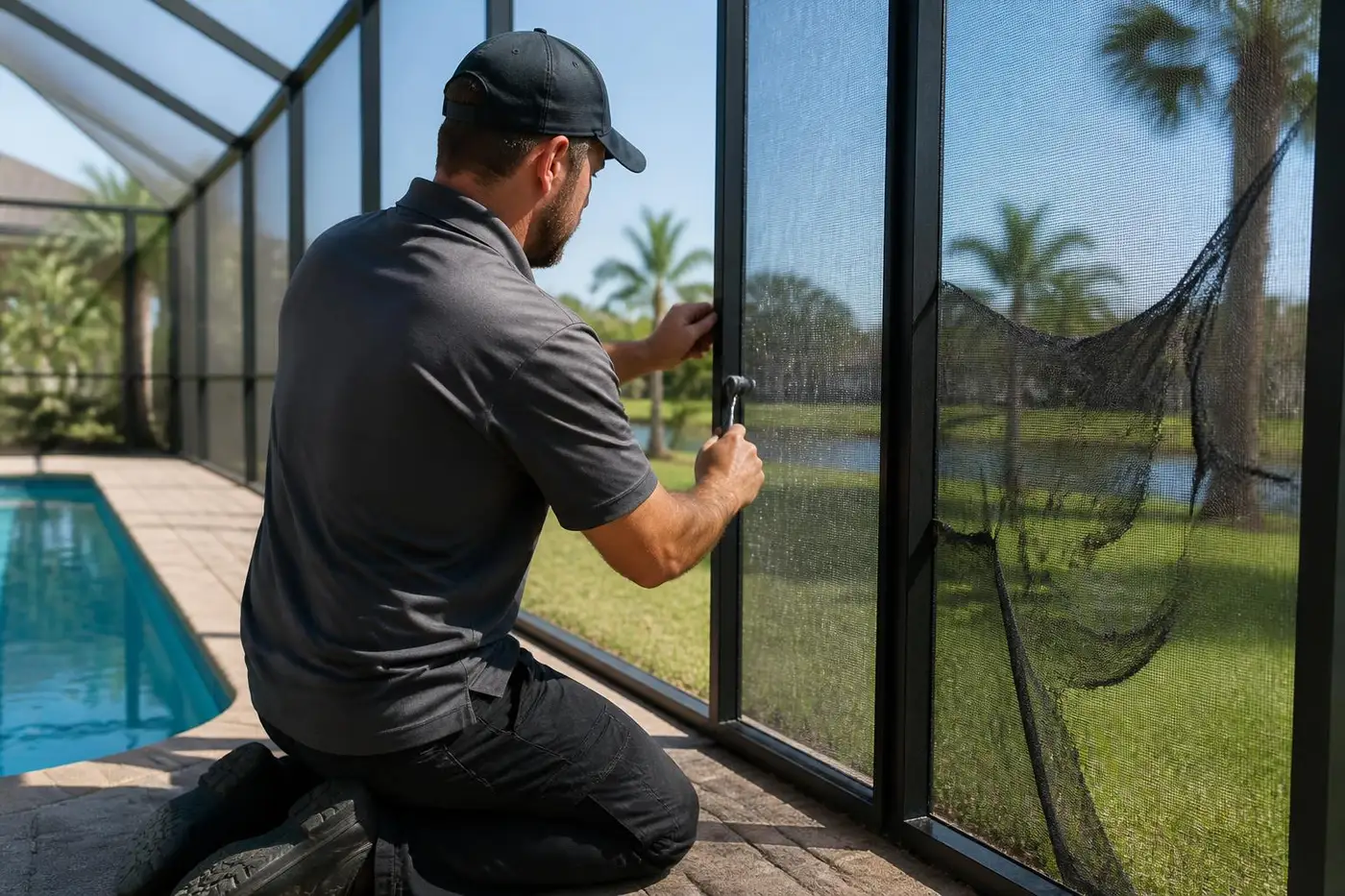
Pool enclosures combine an aluminum frame, screen panels held in by spline, and connection hardware like self-tapping screws, corner keys, and anchors tying posts to the pool deck or footers. Repair work touches any of these depending on what's failed: re-screening panels, straightening or replacing bent frame members, re-securing loose posts, resealing gutters, or fixing doors.
Most calls involve more than one of these at once, especially after a storm, which is why we assess the full structure rather than a single component in isolation.
Why Jacksonville Pool Cages Need More Repair Than Most
Between direct sun exposure most of the year, salt air for anyone within several miles of the coast, and Northeast Florida's active hurricane season, pool enclosures here work under harder conditions than similar structures further inland. Wind load during named storms is the single biggest stress event most cages face, and even a cage that survives structurally can end up with popped panels, pulled screws, or a slightly racked frame section afterward that isn't obvious until you look closely.
Add in the routine wear of pool chemical splash near doors and lower panels, and it's normal for a pool enclosure to need periodic repair well before it needs full replacement.
Common Problems We're Called Out For
Some issues are obvious right after a storm, while others build up gradually over years of sun and wind exposure.
Torn or blown-out screen panels
Often on the windward side of the cage after a storm.
Bent or bowed frame members
From wind load or, less often, impact from a falling limb.
Loose or missing screws at connections
Self-tapping screws back out over time with vibration and thermal cycling.
Super gutter separation
The gutter running along the top of the cage can pull away from the frame, allowing water to run into panels.
Door and latch problems
From worn hardware or a slightly shifted hinge post.
Repair vs. Full Replacement of the Enclosure
Most pool enclosure problems are repairable, including a good amount of storm damage, since aluminum frame members can often be straightened or individually replaced without touching the rest of the cage. We move toward recommending full replacement when the frame shows widespread corrosion at multiple connection points, when a significant number of panels and structural members were damaged together in one event, or when the enclosure is old enough that it no longer meets current Florida Building Code wind load requirements for the area.
We'll be direct with you about which category your enclosure falls into. Plenty of 15-to-20-year-old cages are perfectly good candidates for targeted repair rather than a full teardown.
Frame and Mesh Options When Repairing
When replacing frame sections, we match the existing aluminum extrusion profile so repaired areas tie in cleanly with the rest of the structure, using stainless or appropriately coated fasteners depending on your exposure to salt air. For screen panels, standard 18x14 mesh is most common, with 20x20 no-see-um mesh, pet-resistant screen, or solar/privacy mesh available for homeowners who want an upgrade on specific panels while repairing.
Our Pool Enclosure Repair Process
We start with a full walk of the cage, checking frame alignment, screw connections, gutter seams, panel condition, and door operation, not just the specific issue you mentioned when you called. From there we prioritize any structural items, like a bent post or loose anchor, before moving to screen and cosmetic repairs. Panels get re-screened with matched mesh, hardware gets replaced with appropriately rated fasteners, and doors are adjusted or repaired last so they're operating against a properly secured frame.
For storm-related work, we document damage clearly enough to support an insurance claim if you're pursuing one, though the actual claim and its outcome are between you and your insurer.
Insurance and Storm Damage Considerations
After a named storm, it's worth having your pool enclosure looked at even if it appears fine from the ground, since wind can pop panels loose or bend frame members in ways that aren't obvious from a distance. If you plan to file an insurance claim for storm damage, having a clear record of the enclosure's condition, including photos from before and after repair, helps support that process, though the claim itself and any coverage decisions are between you and your insurance carrier.
We're glad to point out and describe damage we find in plain terms so you have accurate information going into a claim, but we don't handle the claims process itself.
Florida Weather Factors Specific to Pool Cages
Pool cages sit in one of the more exposed spots on a property, catching full sun most of the day and taking direct wind load during storms with nothing to break it. Salt air corrodes exposed fasteners faster near the coast, humidity keeps aluminum-to-aluminum connections slightly damp more often than a covered structure would experience, and pollen season leaves a film on mesh that accelerates UV-related brittleness. Hurricane season is the biggest single risk period; even cages built to code can take cosmetic and minor structural damage that's worth addressing promptly before the next storm.
Planning for Repair Cost
Cost depends heavily on scope: a few panels and some loose hardware is a modest repair, while straightening or replacing multiple frame sections after storm damage costs more due to both materials and labor. Gutter resealing or replacement adds to the estimate if water intrusion has been an issue. We assess the full cage in person and give you an itemized estimate so you can see what's driving the cost and make decisions about what to prioritize if you're working within a budget.
Maintaining Your Pool Enclosure Between Repairs
A few simple habits extend the time between repair visits. Rinsing pollen and salt residue off screens periodically keeps mesh from becoming brittle ahead of schedule, and a quick visual check after any significant storm, looking at gutters, panel corners, and door operation, catches small issues before they become bigger ones. Keeping an eye on nearby trees and trimming branches that hang over the cage reduces the risk of impact damage during high winds.
None of this replaces a professional inspection after major storm events, but it does help you notice developing problems between the times you have the enclosure professionally looked at.
Coordinating Repairs With Pool Deck and Landscaping Work
Because a pool cage sits directly over your pool deck and often close to landscaping, we plan repair work to minimize disruption to both. That means protecting the pool surface and deck furniture during frame or screen work, and being mindful of irrigation lines or plantings near post footings if anchor work is needed at ground level.
If you're already planning other pool deck or landscaping work, it's often efficient to schedule enclosure repairs around the same time, particularly for anything involving access equipment near the cage.
Keep Reading
Related services to compare
Fix it first: Pool Screen Enclosure Repair
Targeted fixes for torn screen, damaged panels, doors, frames, hardware, and storm damage.
Pool Enclosure Installation for Jacksonville homes
New pool cages, pool enclosures, lanais, screened patios, screen rooms, and custom aluminum structures.
Repair option: Screen Enclosure Repair
Targeted fixes for torn screen, damaged panels, doors, frames, hardware, and storm damage.
Fix it first: Pool Screen Repair
Targeted fixes for torn screen, damaged panels, doors, frames, hardware, and storm damage.
Pool Enclosure Rescreening for worn screen
Fresh mesh across a panel, a wall, or an entire pool cage, with the screen type matched to how you use the space.
Planning Pool Screen Enclosure Installation
New pool cages, pool enclosures, lanais, screened patios, screen rooms, and custom aluminum structures.
Local Coverage
Pool Enclosure Repair across the Jacksonville area
Pool Enclosure Repair in St. Johns
Pool Enclosure Repair in Fruit Cove
Pool Enclosure Repair in Julington Creek
Pool Enclosure Repair in Mandarin
Pool Enclosure Repair in Ponte Vedra Beach
Pool Enclosure Repair in Nocatee
Pool Enclosure Repair in Jacksonville Beach
Pool Enclosure Repair in Orange Park
Pool Enclosure Repair in St. Augustine
Pool Enclosure Repair in Atlantic Beach
Pool Enclosure Repair in Neptune Beach
Pool Enclosure Repair in World Golf Village
Pool Enclosure Repair in Green Cove Springs
Pool Enclosure Repair in Middleburg
Pool Enclosure Repair in Fleming Island
Pool Enclosure Repair in Rivertown
FAQ
Pool Enclosure Repair questions
Can a pool enclosure be repaired after storm damage, or does it need full replacement?+
Most storm damage is repairable, including bent frame members that can be straightened or replaced individually. Full replacement is usually only necessary with widespread corrosion or extensive structural damage across the cage.
Do you handle both the frame and the screen when repairing a pool enclosure?+
Yes, we address frame, hardware, gutters, screen panels, and doors as needed rather than fixing one component in isolation.
Will you document damage for an insurance claim?+
We can document the damage we find clearly, which can support a claim, though the claim itself is handled between you and your insurance company.
How often do pool enclosures in Jacksonville need repair?+
It varies by exposure, but coastal and storm-exposed cages often need some repair work every few years, while more sheltered enclosures may go longer between issues.
Can you upgrade to no-see-um mesh while repairing my pool cage?+
Yes, we can install 20x20 no-see-um mesh, pet-resistant screen, or solar/privacy mesh on any panels being repaired.
What causes screws to back out of a pool cage frame over time?+
Vibration from wind and thermal expansion and contraction of the aluminum gradually work self-tapping screws loose, which is why we check connection points during any repair visit.
Is my older pool cage still up to code?+
Wind load standards have changed over the years, and an older enclosure may not meet current Florida Building Code requirements. We can point out any concerns we notice, though a full code review is outside a standard repair visit.
Call for a free estimate on repairing your pool enclosure before the next storm season.
Request an estimate