Storm damage repair
Storm Damage Screen Enclosure Repair in Jacksonville, FL
Fast repair for enclosures damaged by Jacksonville's thunderstorms, tropical systems, and high wind.
Northeast Florida sees storm activity nearly year-round, from short but intense afternoon thunderstorms in summer to tropical systems that track through during hurricane season, and screen enclosures absorb a lot of that weather stress. Storm damage screen enclosure repair covers the full range of what these events do to a structure: torn mesh, bent frames, cracked roof panels, and hardware ripped loose by wind and debris.
This service is broader than hurricane-specific repair, since it includes damage from everyday severe thunderstorms, straight-line wind events, hail, and lightning-adjacent debris strikes, not just named tropical storms. A single strong summer storm cell can do as much damage to an enclosure as a tropical storm passing well offshore.
We assess storm damage across the whole enclosure, since wind and debris rarely limit themselves to one wall, and a thorough inspection after any significant storm catches secondary damage before it turns into a bigger problem.
Jacksonville's location means storm-related repair calls come in waves tied to the weather calendar: spring severe weather, summer afternoon thunderstorms almost daily, and the concentrated risk window of hurricane season from June through November. Each type of storm event tends to leave a different damage signature on an enclosure, and recognizing which one you're dealing with helps set the right repair scope from the start.
What Counts as Storm Damage
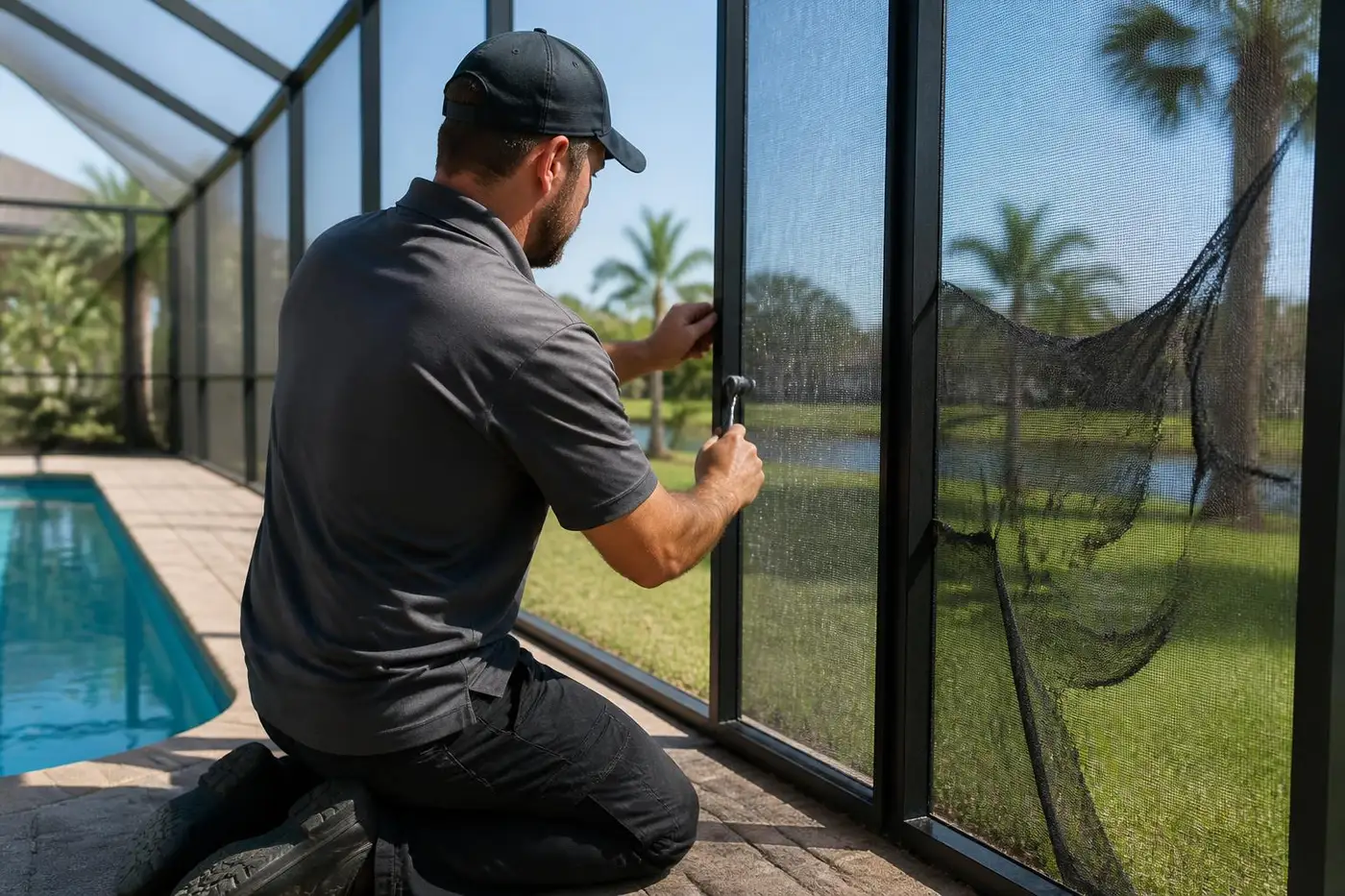
Storm damage includes any harm to the enclosure caused by wind, wind-driven rain, hail, or falling debris during a weather event, as opposed to gradual wear from sun and age. That distinction matters for both repair planning and, when relevant, insurance documentation.
It ranges from a single torn roof panel after a summer storm to widespread mesh failure and frame racking after a tropical system, so the actual repair scope varies enormously from one storm event to the next.
Even storms that don't reach hurricane strength can cause real damage in Jacksonville. A fast-moving thunderstorm cell with a strong outflow gust front can hit an enclosure with wind speeds comparable to a tropical storm for a brief period, tearing panels or bending posts just as effectively.
We've seen everything from a single pinhole tear that eventually widens into a large opening, to complete panel blowouts across an entire wall after a severe squall line moved through the area. Treating minor storm damage seriously, rather than waiting for it to become a bigger problem, saves money over time.
Why Jacksonville Enclosures See Frequent Storm Damage
Jacksonville's subtropical climate produces frequent summer thunderstorms, often daily during peak season, each capable of producing gusty outflow winds strong enough to stress screen panels and loose hardware.
Add in the region's exposure to tropical storms and hurricanes tracking up the Atlantic or Gulf, and Northeast Florida enclosures face a wider range of storm-driven stress over a year than structures in less storm-prone parts of the country.
Enclosures on larger, more open lots or near tree lines take a different kind of damage than those in tighter, more sheltered yards; wind speed tends to be higher on exposed lots while debris strikes are more common near trees. Coastal properties add wind-driven salt spray on top of the mechanical stress of the storm itself, accelerating corrosion on any hardware that gets exposed during the event.
The sheer frequency of thunderstorm activity here means an enclosure in Jacksonville accumulates more cumulative wind stress over its lifespan than a similar structure in a calmer climate, even without ever taking a direct hurricane hit. That steady drumbeat of moderate wind events is part of why routine inspection matters as much as post-storm response.
Recognizing Storm Damage Patterns
Different storm types leave different signatures on an enclosure, which helps in diagnosing what happened and what to check for.
Understanding which pattern applies to your situation also helps set realistic expectations for repair timing and materials needed, since a hail-damaged panel repair looks very different from resetting a frame that's been racked by sustained tropical wind.
Thunderstorm wind gusts
Short bursts of high wind tend to pop individual panels or loosen a section of spline rather than damage the whole structure.
Hail impact
Hail can punch small holes through mesh or dent roof rafters, damage that's easy to overlook until it's pointed out.
Falling debris
Branches and airborne yard debris cause sharp tears and sometimes bend frame members on impact.
Sustained tropical wind
Longer duration wind loads during tropical systems are more likely to rack the frame or blow out multiple panels at once.
Repair vs. Replacement After Storm Damage
Isolated storm damage, such as a couple of torn panels or a single bent post, is almost always repairable without touching the rest of the enclosure, using matching mesh and spliced extrusion for a clean fix.
Cumulative storm damage is a different situation. An enclosure that's taken repeated hits over several storm seasons without full repair between events often reaches a point where multiple weakened sections make replacement of larger portions, or the whole structure, more practical than another round of patching.
We'll walk you through exactly which category your damage falls into and why, rather than defaulting to the more expensive option, so you can make an informed decision about repair versus replacement for your specific enclosure.
Material Choices for Storm-Prone Properties
For properties that see frequent storm exposure, heavier gauge mesh and stainless steel fasteners are worth the added upfront cost, since they hold up to repeated wind stress and any salt exposure better than standard materials.
Frame connections can also be reinforced with additional fasteners or heavier corner keys in storm-exposed sections, an upgrade worth discussing when repairing damage rather than simply replacing like-for-like.
These upgrades typically add modestly to the cost of a repair but can meaningfully extend the time before the next storm causes comparable damage, which is worth weighing for properties with a history of repeated storm-related repairs.
How We Handle Storm Damage Repair
The process starts with a full-structure assessment rather than spot-checking only the obvious damage, since storm stress often reveals itself in more than one location once you look closely at every wall, post, and roof panel.
Priority goes to sealing any openings that are letting water or debris into the pool area or lanai, followed by the fuller repair: replacing torn mesh with matching material, straightening or splicing bent frame sections, and resetting any anchors that loosened during the event.
Once structural repairs are complete, we check hardware, latches, and closers as well, since storm wind puts extra strain on doors and gates that can leave them misaligned even if they weren't the most visible damage.
Throughout the process we communicate what we're finding as we go, since storm damage assessments sometimes reveal more than what prompted the initial call, and we want you to understand the full scope before work proceeds.
Jacksonville's Storm Calendar and Repair Timing
Spring in Northeast Florida brings pollen and the start of severe thunderstorm season, summer adds near-daily afternoon storms and intense sun, and hurricane season from June through November carries the highest risk of major tropical system damage.
Scheduling storm repair promptly after any damaging event matters because openings in the mesh let in more debris, rain, and pests with each subsequent storm, compounding the damage the longer repair is delayed.
Outside of active storm damage, it's worth having an enclosure checked seasonally, particularly heading into hurricane season, so existing weak points like aging mesh or loosening anchors get addressed before the next major storm turns them into a bigger repair.
Keeping a rough mental calendar of your own enclosure's maintenance history alongside the region's storm patterns can help you plan proactive checks rather than only reacting after damage has already occurred.
Working with Insurance After Storm Damage
Some storm damage may be covered under a homeowner's policy depending on the specific terms of your coverage, though that's a determination between you and your insurer rather than something we can guarantee.
We can provide a written repair estimate and documentation of the damage that can support a claim, which many homeowners find useful when working with an adjuster on a storm-related loss.
We're happy to answer general questions about the repair scope for insurance purposes, though for coverage specifics and claim decisions, your insurance company or agent remains the right point of contact.
Planning for Storm Repair Costs
Cost depends heavily on how widespread the damage is: a couple of torn panels from a summer thunderstorm is a modest repair, while extensive mesh failure and frame damage from a tropical system can run considerably higher.
Because storm damage severity varies so much from one event to the next, we provide a free, on-site assessment after any storm rather than quoting sight unseen, so you get an accurate scope and price for your specific situation.
Getting an assessment promptly after a storm, even if you're not sure the damage rises to the level of a claim, gives you documentation and a clear number to work with either way.
Keep Reading
Related services to compare
Fix it first: Screen Enclosure Repair
Targeted fixes for torn screen, damaged panels, doors, frames, hardware, and storm damage.
Pool Enclosure Repair in Jacksonville
Targeted fixes for torn screen, damaged panels, doors, frames, hardware, and storm damage.
Repair option: Screen Enclosure Repair Cost
Targeted fixes for torn screen, damaged panels, doors, frames, hardware, and storm damage.
Fresh mesh with Screen Enclosure Rescreening
Fresh mesh across a panel, a wall, or an entire pool cage, with the screen type matched to how you use the space.
Screen Enclosure Installation for Jacksonville homes
New pool cages, pool enclosures, lanais, screened patios, screen rooms, and custom aluminum structures.
Planning Pool Enclosure Installation
New pool cages, pool enclosures, lanais, screened patios, screen rooms, and custom aluminum structures.
Local Coverage
Storm Damage Screen Enclosure Repair across the Jacksonville area
Storm Damage Screen Enclosure Repair in St. Johns
Storm Damage Screen Enclosure Repair in Fruit Cove
Storm Damage Screen Enclosure Repair in Julington Creek
Storm Damage Screen Enclosure Repair in Mandarin
Storm Damage Screen Enclosure Repair in Ponte Vedra Beach
Storm Damage Screen Enclosure Repair in Nocatee
Storm Damage Screen Enclosure Repair in Jacksonville Beach
Storm Damage Screen Enclosure Repair in Orange Park
Storm Damage Screen Enclosure Repair in St. Augustine
Storm Damage Screen Enclosure Repair in Atlantic Beach
Storm Damage Screen Enclosure Repair in Neptune Beach
Storm Damage Screen Enclosure Repair in World Golf Village
Storm Damage Screen Enclosure Repair in Green Cove Springs
Storm Damage Screen Enclosure Repair in Middleburg
Storm Damage Screen Enclosure Repair in Fleming Island
Storm Damage Screen Enclosure Repair in Rivertown
FAQ
Storm Damage Screen Enclosure Repair questions
Do you repair damage from regular summer thunderstorms or only hurricanes?+
Both. Storm damage repair covers any wind, hail, or debris damage from thunderstorms and tropical systems alike, not just named hurricanes.
How can I tell if damage is from wind or just general wear?+
Storm damage tends to appear suddenly after a specific weather event, often with torn panels or bent frame sections, while wear-related damage develops gradually over years.
Can hail actually damage a screen enclosure?+
Yes, hail can punch small holes through mesh and dent aluminum roof rafters, damage that's sometimes subtle until closely inspected.
Will you check the whole enclosure or just the spot I noticed damage?+
We inspect the full structure after a storm, since wind stress often affects more than the one section that's visibly damaged.
Can you provide documentation for an insurance claim?+
Yes, we can provide a written estimate and damage assessment that can support a claim, though coverage decisions are between you and your insurer.
Should I repair storm damage even if it looks minor?+
Yes, small openings from storm damage let in more water, debris, and pests over time, so addressing them promptly limits further damage.
How often should I have my enclosure checked for storm resilience?+
A seasonal check, especially before hurricane season, helps catch loosening anchors or aging mesh before the next storm turns them into a larger repair.
Does living near the beach change how storms affect my enclosure?+
Yes, wind-driven salt spray during storms accelerates corrosion on hardware and frame connections already stressed by the wind itself.
Call (904) 853-3510 for a free storm damage assessment and repair estimate.
Request an estimate