
Sliding & hinged door fixes
Screen Door Repair in Jacksonville, FL
Repairs for sliding and hinged screen doors that stick, sag, or have torn mesh, anywhere in Jacksonville.
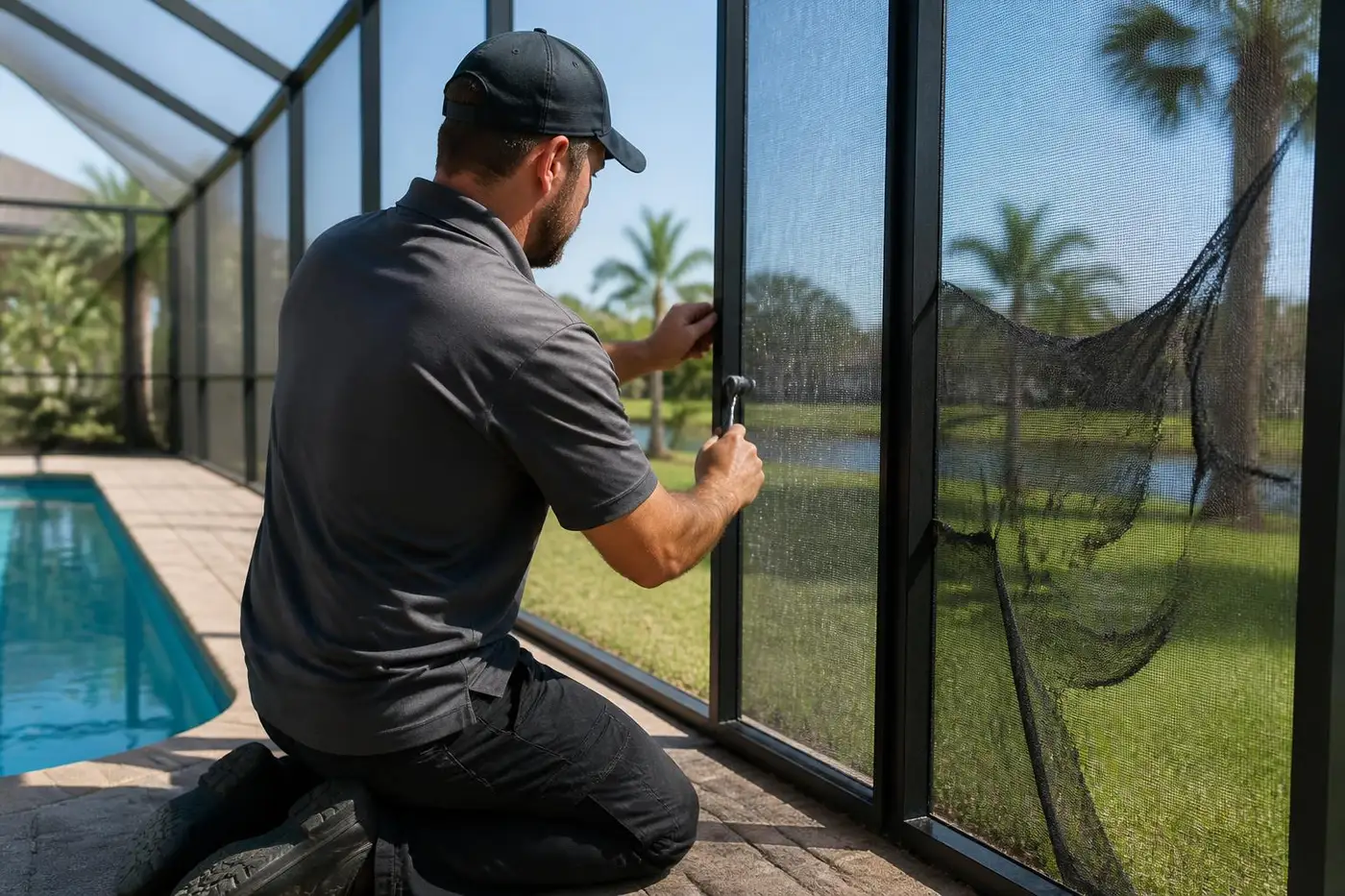
Screen door repair Jacksonville homeowners request more than any other single item, because doors take more abuse than any other part of an enclosure. They open and close dozens of times a day, kids and pets push through them, and rollers or hinges wear out long before the rest of the structure shows age. Screen door repair Jacksonville FL crews handle covers sticking tracks, sagging corners, failed closers, and screen door rescreening Jacksonville doors need when the mesh itself is shot. Mobile screen door repair means the work happens at your address rather than the door leaving the property.
We repair both sliding screen doors, common on lanai and pool cage entries, and hinged screen doors used on side yard gates and standalone entry points, throughout Jacksonville and the surrounding Northeast Florida area.
Most door repairs address one of three things: the frame itself has racked out of square, the rollers or hinges have worn out, or the mesh panel in the door needs re-screening. We diagnose which one (or which combination) is causing your specific problem before recommending a fix.
A door repair is usually quick to schedule and complete compared to larger enclosure work, which makes it one of the more satisfying fixes for homeowners: a door that's been sticking or sagging for months can often be fully corrected in a single visit.
What's Different About a Screen Door vs. a Screen Panel
A fixed screen panel just has to sit still in its frame. A screen door has to move, over and over, while still sealing tight against bugs and holding its shape. That means door frames carry rollers or hinges, a latch or handle, and often a sweep or brush seal at the bottom, all of which are additional points that can wear out or go out of adjustment even when the mesh itself is fine.
Because of that moving hardware, screen door problems are often mechanical rather than just a torn screen. Diagnosing whether it's the rollers, the track, the frame alignment, or the mesh is the first step in any repair.
Why Screen Doors Wear Out Faster in Jacksonville
Daily use is only part of the story here. Jacksonville's humidity swells wood-framed openings seasonally, which can throw an aluminum screen door frame out of alignment with the opening it's set into even though the door itself hasn't changed. Sandy grit tracked in from yards and pool decks works its way into sliding door tracks and rollers, and salt air near the coast corrodes steel roller wheels and hinge pins faster than it would inland.
Storm season adds another layer: a screen door left open or caught by gusting wind can be yanked hard enough to rack the frame or pop mesh loose from the spline, even if the door was in good shape the day before.
Doors on Different Types of Enclosures
Not every screen door serves the same purpose, and that changes how we approach a repair. A front entry screen door gets used constantly and needs hardware that holds up to daily traffic, while a pool cage slider is opened less often but is exposed to pool chemical splash and direct sun for most of the day. Side-yard gate-style screen doors, meanwhile, often face the added stress of being left open in the wind since they're further from the house and easy to forget.
We factor in how a specific door gets used when recommending hardware upgrades, since a heavy-duty roller makes sense on a busy family entry door but might be overkill on a rarely used side gate.
Common Screen Door Problems We See
Sliding and hinged doors tend to fail in different ways, but both show clear warning signs before they stop working altogether.
Sticking or hard-to-slide doors
Usually worn or misaligned rollers, or debris built up in the track.
Sagging corners
A frame that's racked out of square, often from being slammed or from a loose corner key.
Torn or loose mesh in the door panel
The screen itself needs re-spline or full replacement within the door frame.
Gaps at the latch or bottom sweep
Lets bugs in even when the mesh is intact; usually a hardware or seal adjustment.
Repair vs. Replacing the Door
Most sliding and hinged screen door issues are repairable: new rollers, a squared and re-pinned frame, fresh mesh and spline, or an adjusted track will solve the majority of complaints we see. We recommend a full door replacement mainly when the aluminum frame itself is bent beyond squaring, when the track it rides in is too worn or damaged to hold new rollers properly, or when the door is an odd or outdated size that's hard to keep parts for.
We'll always try the repair route first since it's faster and less costly, and only suggest replacement when it's genuinely the more sensible option.
Hardware and Material Options
Roller wheels come in different materials and load ratings; we typically upgrade to stainless steel or heavier-duty nylon rollers on doors that see frequent use, since they hold up better to sandy grit and coastal air than basic steel wheels. For the mesh itself, standard fiberglass screen is common on entry doors, while pool cage sliders often benefit from a slightly heavier mesh given the added handling. Fasteners at hinges and corner keys can be upgraded to stainless steel, which matters most on doors near the coast where standard coated screws corrode faster.
Our Screen Door Repair Process
We start by operating the door to feel exactly where it binds, sags, or rattles, then check the frame with a square to see if it's racked. Rollers get inspected and replaced if worn, tracks get cleaned out, and if the mesh needs attention we pull the old spline and re-screen the panel while the door is already off its track for hardware work.
Once reassembled, we test the door through a full range of motion and check that the latch and any sweep or seal line up correctly before calling the job done.
Florida Weather and Your Screen Door
Humidity swings through the year affect wood-framed openings more than the aluminum door itself, which can throw off alignment seasonally even on a door that was installed correctly. Afternoon storms common from late spring through fall put sudden wind load on doors left ajar, which is one of the most frequent causes of racked frames we're called out for. Salt air corrodes exposed steel hardware faster along the coast, and pollen season leaves a film on tracks that, combined with sandy grit, speeds up roller wear.
What Repair Typically Costs to Plan For
Simple fixes like roller replacement or track cleaning are on the lower end of cost, while a door needing a squared frame, new rollers, and full re-screening will run higher since it involves more labor and materials. Coastal properties opting for stainless hardware will see a modest premium over standard coated fasteners. We give a specific estimate after seeing the door in person, since the mix of issues varies a lot from one door to the next.
When a Screen Door Repair Reveals a Bigger Issue
Occasionally what looks like a simple door problem points to something larger. A door that won't stay square no matter how many times it's adjusted can mean the opening itself has shifted, sometimes from foundation settling nearby or from a structural post on a pool cage that's come loose. In those cases we'll flag the underlying issue rather than repeatedly patching the door symptom.
Most of the time, though, a screen door complaint really is just about the door: worn rollers, a loose corner key, or mesh that's finally given out after years of daily use. We'll tell you plainly which situation you're dealing with after taking a look.
Scheduling Around Jacksonville's Busy Seasons
Screen door repair requests tend to spike right after storms roll through and again heading into peak bug and pollen season in spring, when a sticking or gapping door becomes a lot more noticeable. We recommend having a door looked at as soon as you notice a problem rather than waiting, since minor roller wear or a slightly loose corner key is a quick fix, but the same issue left alone through a few more months of daily use and Florida humidity swings tends to turn into a bigger repair.
If you're planning ahead of a specific event, like hosting outdoors or getting ready for hurricane season, let us know and we'll prioritize getting your door fully functional before then.
Related Door and Enclosure Services
A door problem sometimes points somewhere else. If the door is past repair or you want access where there is none today, screen enclosure door installation covers replacement doors and new openings. If the latch, closer, rollers, or handles are the real issue, screen enclosure hardware repair is the narrower fix.
For scheduling, mobile screen enclosure repair explains how we handle door and panel work on site in a single visit across the Jacksonville service area.
Service Guide
Screen doors work harder than any other part of the enclosure
A screen door gets opened and closed dozens of times a day in a busy household, which puts continuous mechanical stress on hardware that stationary panels never experience. Rollers wear down, closers lose their damping, latches loosen, and frames rack out of square from repeated slamming — all well before the mesh itself typically fails. Because a door is also the most visible and most used part of a screened structure, problems here are usually noticed and reported faster than a quiet tear developing in a back panel.
Whether it's a sliding door on a lanai or a swinging screen door on a porch entrance, the fix is often about hardware rather than mesh, which makes screen door repair a somewhat different job than general panel work.
Sliding screen doors: rollers, tracks, and alignment
Sliding screen doors, common on lanai and pool cage entries, ride on rollers set into a track at the top and bottom of the frame. Over time these rollers wear flat, collect grit, or crack, causing the door to bind, drag, or pop off the track entirely. A door that's suddenly hard to slide or that jumps the track partway through its travel is almost always a roller or track issue rather than a mesh problem.
Track debris — sand, leaves, and general yard grit — is one of the most common and most preventable causes of sliding door trouble, since it builds up gradually and eventually jams the rollers or scores the track surface. Bent or dented track sections, often from a door being forced while jammed, will also need straightening or replacement before new rollers can function correctly.
Swinging screen doors: closers, hinges, and sagging frames
Swinging screen doors depend on closers to control the swing speed and prevent slamming, and on hinges to keep the door hanging square. A closer that's lost its damping fluid or developed internal wear will let the door slam shut hard enough to stress the frame corners and eventually rack the whole door out of square. A sagging swinging door — one that scrapes the threshold or won't latch cleanly — is usually a sign of loosened hinge screws or a frame that has racked from repeated hard closing.
Re-squaring a sagging frame sometimes solves the problem on its own, but if the corners have pulled apart or the mesh has stretched from the racking, the panel may need re-tensioning or replacement at the same time as the hardware fix.
Latches, handles, and everyday hardware wear
Latch mechanisms and handles see constant hand contact and are one of the more common points of failure on any screen door. A latch that no longer catches securely can be caused by a worn strike plate, a loose mounting screw, or a door that's shifted position due to frame sag — which means fixing the latch sometimes requires addressing the underlying alignment first rather than just swapping the hardware.
Door sweeps at the bottom of the frame keep out crawling insects and debris and wear down from repeated contact with the threshold; a gap under a worn sweep is often mistaken for a bigger door problem when it's really a simple, inexpensive part to replace.
Kickplates and protecting the lower door frame
The bottom portion of a screen door takes the most physical abuse — foot traffic, pet paws, pushed-open doors, and general bumps from anything carried through. A kickplate installed across the lower section of the door protects the mesh in that zone from repeated contact damage and is a practical addition on any door used heavily by kids or pets.
Doors without a kickplate often show a pattern of repeated tears in the same lower area, which is a good sign that adding one during a repair will reduce how often that panel needs attention going forward.
Pet damage on screen doors and how to reduce repeat repairs
Dogs and cats pushing on, scratching at, or nosing through a screen door create some of the most frequent and most predictable damage seen on any screened structure. Claws catch and tear standard fiberglass mesh quickly, and repeated pressure at nose or paw height stretches the mesh even before it tears outright.
For doors with regular pet traffic, upgrading to pet-resistant mesh combined with a kickplate at the lower section addresses both the tearing and the stretching, and generally holds up far longer than standard mesh in the same location. It's a reasonable upgrade to consider any time a door is being repaired for pet damage a second time.
DIY-friendly fixes versus jobs that need a professional
Some screen door issues are genuinely manageable without professional help: clearing debris from a sliding track, tightening a loose latch screw, or replacing a worn door sweep are all reasonable DIY tasks with basic tools. Roller replacement is often DIY-feasible too, though matching the correct roller size and wheel type to the existing track takes some care.
Frame racking, bent tracks, closer replacement involving door alignment, and any repair where the mesh, hardware, and frame all need attention together are generally better handled professionally, since fixing one element without addressing the others tends to lead to the same problem recurring within a short time.
Keep Reading
Related services to compare
Fix it first: Screen Enclosure Door Repair
Targeted fixes for torn screen, damaged panels, doors, frames, hardware, and storm damage.
Screen Enclosure Repair in Jacksonville
Targeted fixes for torn screen, damaged panels, doors, frames, hardware, and storm damage.
Repair option: Pool Screen Repair
Targeted fixes for torn screen, damaged panels, doors, frames, hardware, and storm damage.
Extend its life with Pool Cage Door Replacement
Doors, reinforcement, fasteners, painting, and restoration work that extends an enclosure's usable life.
Screen Enclosure Door Installation details
Doors, reinforcement, fasteners, painting, and restoration work that extends an enclosure's usable life.
Local Coverage
Screen Door Repair across the Jacksonville area
Screen Door Repair in St. Johns
Screen Door Repair in Fruit Cove
Screen Door Repair in Julington Creek
Screen Door Repair in Mandarin
Screen Door Repair in Ponte Vedra Beach
Screen Door Repair in Nocatee
Screen Door Repair in Jacksonville Beach
Screen Door Repair in Orange Park
Screen Door Repair in St. Augustine
Screen Door Repair in Atlantic Beach
Screen Door Repair in Neptune Beach
Screen Door Repair in World Golf Village
Screen Door Repair in Green Cove Springs
Screen Door Repair in Middleburg
Screen Door Repair in Fleming Island
Screen Door Repair in Rivertown
FAQ
Screen Door Repair questions
My sliding screen door is hard to open, what's usually wrong?+
Most often it's worn or dirty rollers, or debris built up in the track. Both are straightforward to fix or replace.
Can a sagging screen door corner be fixed without replacing the whole door?+
In most cases yes. We can square the frame and re-secure the corner key rather than replacing the entire door.
Do you repair hinged screen doors as well as sliders?+
Yes, we handle both sliding and hinged screen doors, including gate-style entries.
How long does a typical screen door repair take?+
Most single-door repairs are completed in one visit, though frame squaring and re-screening together take longer than a simple roller swap.
Will you match the mesh if my door screen is torn?+
Yes, we match mesh type as closely as possible when re-screening a door panel.
Why does my screen door work fine in winter but stick in summer?+
Seasonal humidity changes can swell the surrounding frame or opening, which throws off alignment even though the door itself hasn't changed.
Call for a free estimate on fixing your sticking, sagging, or torn screen door.
Request an estimate