
Keep the tiny bugs out
No-See-Um Screen Installation in Jacksonville, FL
Tighter 20x20 mesh blocks gnats and no-see-ums that standard screen lets through.
No-see-um screen installation Jacksonville homeowners ask about starts with one problem: standard 18/14 fiberglass screen stops mosquitoes, but the nearly invisible biting gnats that come off the marsh and the St. Johns River pass straight through it. A 20/20 no-see-um screen uses a much tighter weave, and no-see-um mesh Jacksonville enclosures are fitted with is the practical fix when evenings on the lanai or pool deck have become unusable.
No-see-um screen uses a much tighter weave, usually 20x20, to close those gaps. It's a popular upgrade for lanais near wooded lots, the St. Johns River, or the marsh side of Jacksonville's coastal neighborhoods, where regular screen just isn't cutting it in the evenings.
What No-See-Um Screen Is
No-see-um mesh is woven with more strands per inch than standard screen, closing the gaps down enough to keep out biting midges as well as regular insects. It's typically fiberglass, though it's also available in some vinyl-coated and metal versions for extra durability.
Why Jacksonville Homeowners Choose No-See-Um Screen
Neighborhoods near marshland, creeks, and wooded retention ponds deal with no-see-um season heavily in warmer months, and standard screen simply doesn't stop them. Homeowners who use their lanai in the evening — for dinner, relaxing, or watching the yard — are the ones who benefit most from making this switch.
20/20 Mesh vs Standard 18/14 Screen
Standard screen is woven 18 strands by 14 strands per inch, which leaves openings large enough for no-see-ums and small gnats. A 20/20 weave tightens that grid in both directions, closing the gaps that let the smallest insects through while keeping the same fiberglass construction and installation method.
The practical differences are visibility and airflow rather than durability. A tighter weave reads slightly darker from the outside and softens the view a little, and it slows breeze more than an 18/14 panel. Most homeowners who have been bitten through their existing screen consider that an easy trade. If your mesh is simply old rather than the wrong weave, screen mesh replacement in standard fiberglass may be all you need.
Does No-See-Um Screen Reduce Airflow?
The tighter weave that blocks tiny bugs also blocks more air. You'll notice less breeze coming through a no-see-um screened lanai compared to standard mesh, and it can also collect more pollen and dust since less is passing through the gaps. Most homeowners find the trade worth it for evening comfort, but it's worth knowing before committing the whole enclosure to this mesh.
Bug protection
20x20 weave stops biting gnats that standard 18x14 mesh lets through.
Reduced airflow
Expect noticeably less breeze than standard screen, especially on calm days.
More pollen buildup
The tighter weave catches more pollen and dust, meaning more frequent rinsing.
Visibility
Slightly more visible weave lines than standard mesh, though still see-through.
Full Enclosure vs. Partial Installation
Some homeowners install no-see-um mesh across the whole enclosure, while others only upgrade the panels closest to the yard or water, keeping standard mesh on the rest to preserve airflow. We can mix mesh types by panel if that balance makes more sense for how you use the space.
Where No-See-Um Mesh Works Best Around a Pool or Lanai
No-see-ums are worst at dusk and dawn, low to the ground, and near standing water — which is exactly the environment inside a pool cage. Lower wall panels and the panels nearest the water usually deliver the most benefit, and many Jacksonville cages get 20/20 mesh on the walls with standard screen retained up high on the roof panels where airflow matters most.
On an attached lanai the priority is usually the seating area and the panels closest to the door, where people sit still at exactly the hours the gnats are active. If the whole enclosure is due for fresh mesh anyway, folding the upgrade into pool cage rescreening or screen enclosure rescreening costs less than a separate visit later.
Installation Process
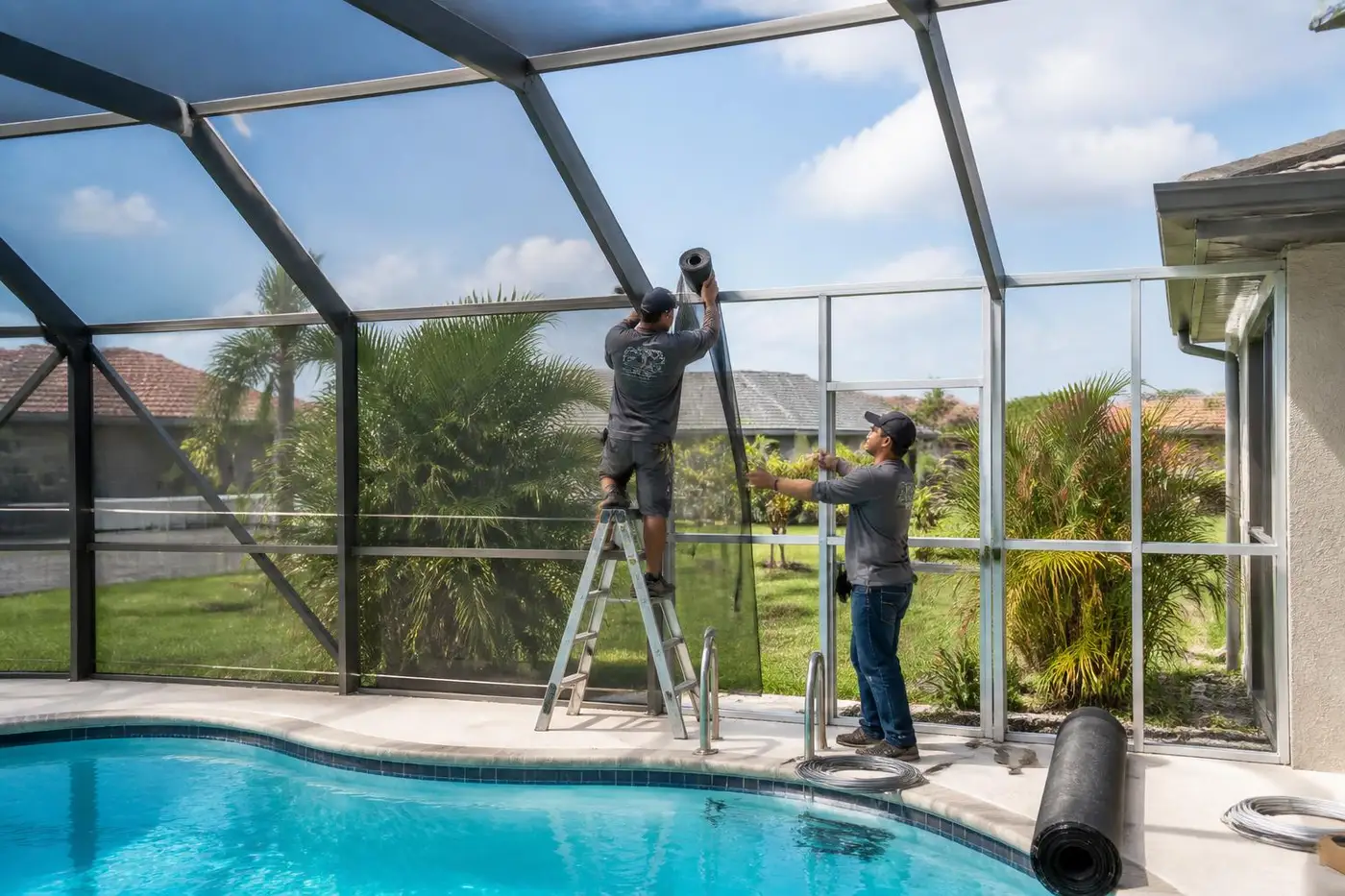
Installing no-see-um screen follows the same steps as any rescreen: removing old material, checking spline channels and frame condition, then cutting and tensioning the new mesh panel by panel. Because the weave is tighter, we're a bit more careful with tension to avoid puckering at the corners.
Weather Considerations
In peak humidity and pollen season, tighter mesh means more visible film buildup that needs occasional rinsing to keep the view clear. During hurricane season, wind load on any mesh matters, and a tightly tensioned no-see-um panel performs similarly to standard screen in terms of frame stress.
No-See-Um Screen Installation Cost Factors
No-see-um mesh generally costs more per panel than standard fiberglass. Doing a full-enclosure upgrade costs more upfront than a standard rescreen, but many homeowners choose to phase it in — starting with the panels facing the yard or water where bugs are worst.
When a Tighter Weave Is Necessary
Standard 18x14 mesh stops mosquitoes and leaves but not no-see-ums. If you're sitting in a screened enclosure at dusk still getting bitten by something you can barely see, the screen isn't damaged - the openings are simply larger than the insect. That's the entire reason this service exists.
It's most worth doing on properties near marsh, tidal creek, the Intracoastal, or any standing water, and on enclosures the family actually uses in the evening. If you rarely use the space after dark or you're inland with no water nearby, the airflow trade-off may not be worth it.
Weave Specifications and the Trade-Offs
No-see-um mesh typically runs 20x20 or tighter versus the 18x14 standard, closing the gaps small biting midges pass through. The tighter weave costs you some airflow and a slight reduction in view clarity - both noticeable on the first evening and generally forgotten within a week, but they're real and we'd rather you hear it before installation than after.
The material handles UV and tension comparably to standard fiberglass. It installs in the same channel with the same spline, so no frame modification is needed. Because the weave catches more airborne dust and pollen, it benefits from an occasional rinse to stay clear - about the only ongoing difference from standard mesh.
Cost Compared With Standard Mesh
No-see-um mesh carries a modest per-square-foot premium over 18x14 fiberglass. On a small lanai the total difference is minor; across a full pool cage it becomes a line item worth deciding on deliberately.
A practical middle path many homeowners choose: tight weave on the panels around the seating area and standard mesh elsewhere. It costs less than a full upgrade and puts the benefit where people actually sit. Labor is the same either way, so the upgrade is cheapest when done during a rescreen you were already paying for.
Keep Reading
Related services to compare
Build new: Screen Enclosure Installation
New pool cages, pool enclosures, lanais, screened patios, screen rooms, and custom aluminum structures.
Pool Cage Installation for Jacksonville homes
New pool cages, pool enclosures, lanais, screened patios, screen rooms, and custom aluminum structures.
Planning Pool Enclosure Installation
New pool cages, pool enclosures, lanais, screened patios, screen rooms, and custom aluminum structures.
Extend its life with Screen Enclosure Door Installation
Doors, reinforcement, fasteners, painting, and restoration work that extends an enclosure's usable life.
Pet Resistant Screen Installation for worn screen
Fresh mesh across a panel, a wall, or an entire pool cage, with the screen type matched to how you use the space.
Rescreen route: Privacy Screen Installation
Fresh mesh across a panel, a wall, or an entire pool cage, with the screen type matched to how you use the space.
Local Coverage
No-See-Um Screen Installation across the Jacksonville area
No-See-Um Screen Installation in St. Johns
No-See-Um Screen Installation in Fruit Cove
No-See-Um Screen Installation in Julington Creek
No-See-Um Screen Installation in Mandarin
No-See-Um Screen Installation in Ponte Vedra Beach
No-See-Um Screen Installation in Nocatee
No-See-Um Screen Installation in Jacksonville Beach
No-See-Um Screen Installation in Orange Park
No-See-Um Screen Installation in St. Augustine
No-See-Um Screen Installation in Atlantic Beach
No-See-Um Screen Installation in Neptune Beach
No-See-Um Screen Installation in World Golf Village
No-See-Um Screen Installation in Green Cove Springs
No-See-Um Screen Installation in Middleburg
No-See-Um Screen Installation in Fleming Island
No-See-Um Screen Installation in Rivertown
FAQ
No-See-Um Screen Installation questions
Does no-see-um screen actually stop gnats completely?+
It stops the vast majority since the weave is much tighter than standard screen, though no screen is 100% insect-proof at open doors.
Will my lanai feel stuffier with this mesh?+
You'll likely notice reduced airflow compared to standard screen, which is the main trade-off for the tighter weave.
Can I install no-see-um mesh on just a few panels?+
Yes, we regularly mix mesh types on one enclosure based on which side faces the yard, water, or wooded area.
Does this mesh need more cleaning?+
It tends to collect more pollen and dust than standard screen, so periodic rinsing helps keep visibility clear.
Is no-see-um mesh available in solar or privacy versions?+
Tight-weave options exist that combine bug protection with reduced glare, though they cut airflow further still.
Call for a free estimate and we'll help you decide which panels make the most sense for no-see-um mesh.
Request an estimate