
Adding a new access point
Screen Door Replacement & Installation in Jacksonville, FL
Add a new door or upgrade an existing one for easier access to your Jacksonville screen enclosure.
Screen door replacement Jacksonville homeowners need falls into two jobs: swapping a damaged enclosure door for a new one, and cutting in a new access door where the original layout never had one. Jacksonville screen door installation work here covers both, including pool cage door replacement Jacksonville pool owners schedule after years of salt air and daily use. Screen enclosure door installation Jacksonville wide includes the full assembly — door frame, hinges or rollers, closers, latches and handles, and the mesh itself — not just the panel.
Screen enclosure door installation covers both new openings framed into an existing enclosure and full replacement of a worn door that no longer swings, seals, or latches the way it should. Either way, the frame has to tie into the surrounding aluminum structure correctly so it does not compromise the enclosure's overall strength.
When homeowners add a new door
The most common requests we see are a side yard door for lawn equipment access, a second pool-area entrance near an outdoor kitchen, or an oversized double door for moving furniture or grills in and out. Each of these means cutting into an existing screen panel and installing a proper header, jamb, and threshold rather than just framing something into open screen.
Why Jacksonville homes need well-built access points
A poorly framed door opening puts uneven stress on the surrounding panels, especially during Northeast Florida's gustier months when wind pushes against the whole enclosure. A properly installed door distributes that load through its own frame instead of pulling at the screen and spline around it, and it keeps insects, especially the no-see-ums common near marshy and low-lying Jacksonville lots, from finding a gap to slip through.
Signs an existing door needs replacing instead of adjusting
If a door sticks, drags, or will not latch no matter how the hinges are adjusted, the frame itself may be bent or the header may have shifted. In that case, adjusting the current door is a temporary fix at best, and installing a new door assembly resets everything to true.
Frame, hardware, and mesh choices
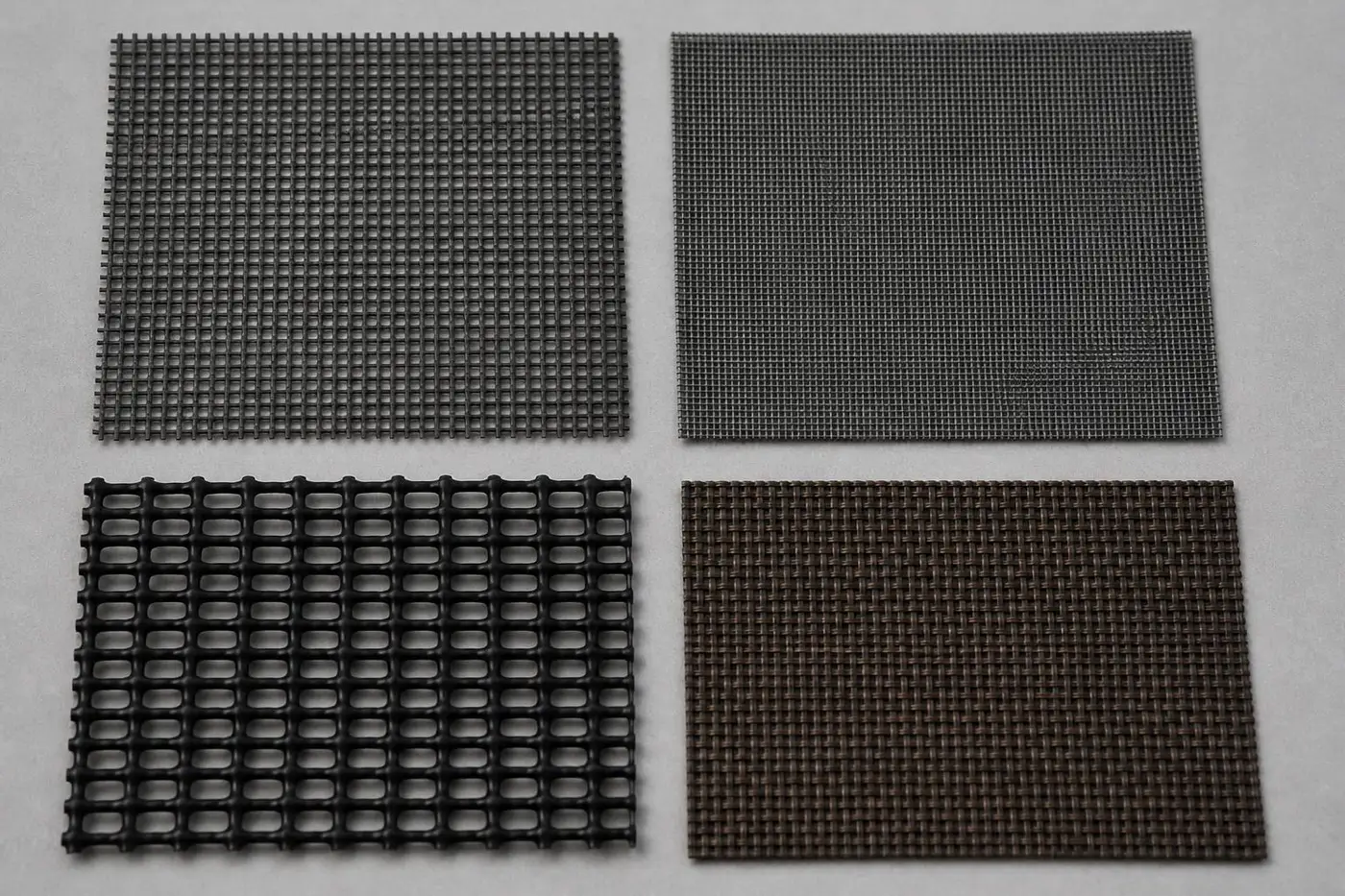
New doors are built from aluminum extrusion matched to your enclosure's finish, hung on corrosion-resistant hinges, and fitted with a latch, and optionally a self-closing hinge or door closer for pool safety. Mesh options include standard 18/14 charcoal screen, 20/20 no-see-um mesh for tighter bug control, or pet screen where dogs use the door regularly.
Whichever configuration you choose, it helps to walk the location with us before cutting anything, since a door placed at the wrong panel width can require an unusually narrow or wide custom frame that adds cost. Standard panel widths keep the framing straightforward and the finished opening closer to a typical installation timeline.
Standard 18/14 mesh
The common default for general enclosure screening, good airflow and visibility.
20/20 no-see-um mesh
Tighter weave that cuts down on the smallest biting insects around a door opening.
Pet screen
Reinforced mesh that resists tearing from claws and pushing.
How the installation process works
For a new opening, we measure and mark the cut location, remove the existing screen and spline in that section, and frame in a header and jamb tied into the surrounding structure with appropriate anchors. The door is hung, screened, and fitted with hardware, then the latch and closer are adjusted so it operates smoothly. For a straight door swap, the process skips the framing step and focuses on removing the old unit and hanging the new one plumb and square.
Weather and seasonal considerations
Jacksonville's humidity and salt-tinged air near the coast make stainless steel fasteners a better long-term choice than standard coated screws at hinge points. Hurricane season means door frames should be anchored solidly enough to handle wind-driven rain without flexing, and pollen season leaves residue on hinges and tracks that is worth wiping down so the door keeps closing smoothly.
It also helps to think about traffic patterns before choosing a location for a new opening. A door placed too close to a pool filter, grill, or planting bed can create a bottleneck that leads to the screen around it being brushed against and torn repeatedly.
Cost planning
Cost depends mainly on whether you are cutting a new opening into existing screen versus swapping an existing door, plus size, mesh upgrade, and hardware choices like a closer or double-door configuration. New openings involve more labor because of the framing work, while a straight door replacement is typically quicker and less costly.
Double doors for equipment access, mowers, generators, or patio furniture, are framed with a center mullion or a removable center post depending on how wide an opening you need, and that choice affects both cost and how the door swings day to day.
If the new door will be used frequently for equipment or pets, ask about a heavier-duty closer and a kickplate along the bottom rail, since that combination noticeably extends the life of the screen closest to the ground where most repeated contact happens. Homeowners also ask about matching thresholds to existing pool deck pavers so there is no trip hazard at the new opening, which we account for during framing.
When Adding a Door Makes Sense
This is an addition, not a repair. Homeowners come to it when an enclosure was built with a single door on the wrong side of the pool deck, when a new walkway, outdoor kitchen, or side-yard gate changed how the family actually moves through the yard, or when a screen room needs a second exit so guests aren't routed through the house. It also comes up on new construction where the builder's cage shipped with one minimum-spec door.
The practical test is traffic. If people are regularly walking the long way around the enclosure, or propping the one door open because it's the only route to the grill, a second opening pays for itself in daily use. If the existing door simply doesn't work well, that's a repair or replacement conversation instead.
Door Types and Framing Considerations
A new opening means cutting into an existing panel bay and building a jamb, header, and threshold that carry the loads the removed screen section used to. That framing work is the real job; hanging the door is the easy part. We use matching extrusion so the new opening reads as original, tie it into the top chord and the deck anchor, and reinforce the adjacent uprights where the swing puts repeated load on them.
Options include standard swing doors, wider doors sized for wheelbarrows and pool equipment, double doors on long runs, and kickplate heights chosen to match the rest of the cage. Threshold detail matters on a pool deck: we set it to shed water outward rather than trapping it against the bottom rail, which is the defect we most often find on doors added by a handyman.
Cost Factors for a New Door Opening
Pricing separates into framing and unit. Framing cost depends on where the door goes - a bay on a straight run is straightforward, while an opening near a corner post, under a low chord, or in a bay with a structural upright requires more reinforcement and time. If the deck at the new threshold is uneven, that adds a step before anything can hang plumb.
The unit cost tracks size and hardware the same way a replacement does, plus the new mesh panels above and beside the door. Adding a door during a scheduled rescreen or repair visit is meaningfully cheaper than a standalone trip, since the panels around the opening are already coming out.
Keep Reading
Related services to compare
Build new: Screen Enclosure Installation
New pool cages, pool enclosures, lanais, screened patios, screen rooms, and custom aluminum structures.
Pool Enclosure Installation for Jacksonville homes
New pool cages, pool enclosures, lanais, screened patios, screen rooms, and custom aluminum structures.
Repair option: Screen Enclosure Door Repair
Targeted fixes for torn screen, damaged panels, doors, frames, hardware, and storm damage.
Build new: Pool Screen Enclosure Installation
New pool cages, pool enclosures, lanais, screened patios, screen rooms, and custom aluminum structures.
Screen Enclosure Repair in Jacksonville
Targeted fixes for torn screen, damaged panels, doors, frames, hardware, and storm damage.
Repair option: Screen Door Repair
Targeted fixes for torn screen, damaged panels, doors, frames, hardware, and storm damage.
Local Coverage
Screen Enclosure Door Installation across the Jacksonville area
Screen Enclosure Door Installation in St. Johns
Screen Enclosure Door Installation in Fruit Cove
Screen Enclosure Door Installation in Julington Creek
Screen Enclosure Door Installation in Mandarin
Screen Enclosure Door Installation in Ponte Vedra Beach
Screen Enclosure Door Installation in Nocatee
Screen Enclosure Door Installation in Jacksonville Beach
Screen Enclosure Door Installation in Orange Park
Screen Enclosure Door Installation in St. Augustine
Screen Enclosure Door Installation in Atlantic Beach
Screen Enclosure Door Installation in Neptune Beach
Screen Enclosure Door Installation in World Golf Village
Screen Enclosure Door Installation in Green Cove Springs
Screen Enclosure Door Installation in Middleburg
Screen Enclosure Door Installation in Fleming Island
Screen Enclosure Door Installation in Rivertown
FAQ
Screen Enclosure Door Installation questions
Can you cut a new door into my existing screen enclosure?+
Yes, we frame in a header and jamb tied into the existing structure so the new opening does not weaken the surrounding panels.
What hinge and latch options do you offer?+
Standard hinges and latches, plus self-closing hinges or door closers, which many homeowners add for pool safety.
How do I know if I need a new door versus adjusting the current one?+
If the frame is bent, racked, or the header has shifted, adjustment alone will not hold, and a new door is the more lasting fix.
Can I upgrade to no-see-um mesh just on the new door?+
Yes, mesh choice can differ panel by panel, so upgrading only the door area is common and cost-effective.
Will adding a door affect my enclosure's overall strength?+
Not when the opening is properly framed with a header and jamb sized for the load, which is why we do not recommend cutting in a door without that structure.
Call (904) 853-3510 for a free estimate on screen enclosure door installation in Jacksonville.
Request an estimate