New mesh, same frame
Pool Enclosure Rescreening in Jacksonville, FL
Restore a worn pool enclosure with new mesh and spline without replacing the aluminum frame.
A pool enclosure protects the deck and pool from leaves, insects, and debris, but the mesh that does that job doesn't last forever under Jacksonville's sun. When panels start tearing, sagging, or letting bugs through, rescreening restores the enclosure without the cost or disruption of tearing down the frame.
This page covers when rescreening makes sense for a pool enclosure, what the work involves, and what factors affect how it's priced in Northeast Florida.
What Pool Enclosure Rescreening Covers
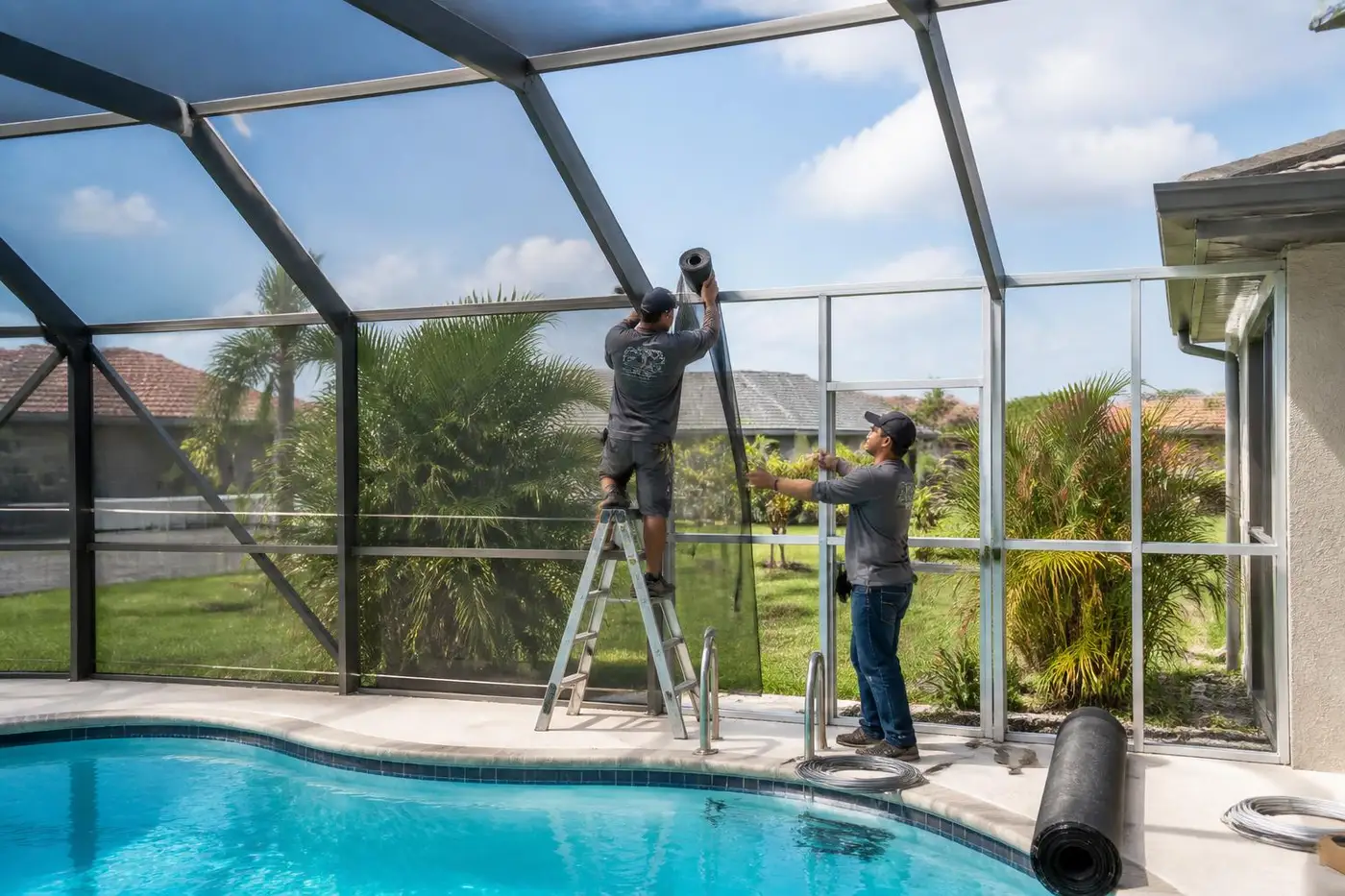
Rescreening replaces the mesh and spline in each panel of the aluminum frame that makes up the enclosure. The old screen and spline are pulled from the channel, the channel is cleaned out, and new mesh is set and secured with fresh spline, one panel at a time. The frame itself, posts, beams, and footers, is left as-is unless a separate structural issue is found during the work.
It can be done as a full rescreen covering every panel, or as a partial rescreen targeting only the sections showing damage. Many Jacksonville homeowners choose a partial rescreen first on the panels that failed after a storm, then plan a full rescreen later once the rest of the mesh reaches the same age.
Why Pool Enclosures Need Rescreening in Jacksonville
Direct sun exposure over a pool deck is intense, and mesh facing south or west absorbs years of UV that gradually makes it brittle even before it tears. Pollen season each spring adds a layer of buildup that often gets removed with a pressure washer, which is harder on aging screen than normal rainfall.
Storms are the other major factor. Afternoon thunderstorms common through the warmer months can drive debris into a panel, and hurricane season can damage several panels at once, especially on the side of the enclosure that faces prevailing wind.
Signs It's Time to Rescreen
Torn or ballooning panels, mesh that's turned brittle or discolored, and spline that's pulling loose from the frame are the most common indicators. Increased bugs getting into the pool area despite no obvious hole is often a sign of small deteriorated spots rather than one clear source.
Multiple tears across panels
A pattern of damage across several panels usually means the mesh has reached the end of its life.
Sagging screen
Loose or bowing panels often indicate stretched, UV-worn mesh that no longer holds tension.
Spline separating from frame
Dried or shrunk spline lets panels come loose even if the screen itself is intact.
Repair vs. Full Rescreen
A single small hole in otherwise sound screen is usually worth a spot repair. Once damage is showing up in three or more separate panels, or the mesh is uniformly old across the enclosure, a full rescreen typically costs less overall than repeated repair visits, since the labor setup is shared across every panel done in one trip.
Mesh Options
Standard 18x14 fiberglass mesh is the typical choice and works well for general insect control. 20x20 no-see-um mesh has a tighter weave that helps in yards near marsh or standing water, and pet screen adds durability on lower panels where pets are active. Solar and privacy mesh reduce glare on the pool deck at the cost of some visibility through the screen.
The Rescreening Process
The crew removes old mesh and spline from each panel being redone, cleans the channel, sets new mesh across the opening, and rolls fresh spline into place to secure it before trimming the excess. Roof panels over the pool deck usually need a ladder or lift and are handled with more care given the height and the aluminum ribs not being designed to support foot traffic.
Weather and Planning Considerations
Morning work is typical during the warmer months to avoid Jacksonville's regular afternoon storms, and windy days can push roof panel work later since large mesh sheets act like sails before they're secured. Enclosures near the beaches see faster fastener corrosion from salt air, which is worth mentioning when scheduling any future maintenance.
Cost Planning
Pricing is generally based on panel count and mesh type, with roof panels costing more per panel due to access requirements. A partial rescreen of a few damaged panels costs less upfront than a full rescreen, though a full rescreen often has a better overall cost per panel once labor is spread across the entire job. An on-site walkthrough gives the most accurate number since layouts vary from property to property.
Keep Reading
Related services to compare
Fix it first: Pool Enclosure Repair
Targeted fixes for torn screen, damaged panels, doors, frames, hardware, and storm damage.
Pool Enclosure Installation for Jacksonville homes
New pool cages, pool enclosures, lanais, screened patios, screen rooms, and custom aluminum structures.
Rescreen route: Pool Cage Rescreening
Fresh mesh across a panel, a wall, or an entire pool cage, with the screen type matched to how you use the space.
Fresh mesh with Screen Enclosure Rescreening
Fresh mesh across a panel, a wall, or an entire pool cage, with the screen type matched to how you use the space.
Pool Screen Enclosure Repair in Jacksonville
Targeted fixes for torn screen, damaged panels, doors, frames, hardware, and storm damage.
Planning Pool Screen Enclosure Installation
New pool cages, pool enclosures, lanais, screened patios, screen rooms, and custom aluminum structures.
Local Coverage
Pool Enclosure Rescreening across the Jacksonville area
Pool Enclosure Rescreening in St. Johns
Pool Enclosure Rescreening in Fruit Cove
Pool Enclosure Rescreening in Julington Creek
Pool Enclosure Rescreening in Mandarin
Pool Enclosure Rescreening in Ponte Vedra Beach
Pool Enclosure Rescreening in Nocatee
Pool Enclosure Rescreening in Jacksonville Beach
Pool Enclosure Rescreening in Orange Park
Pool Enclosure Rescreening in St. Augustine
Pool Enclosure Rescreening in Atlantic Beach
Pool Enclosure Rescreening in Neptune Beach
Pool Enclosure Rescreening in World Golf Village
Pool Enclosure Rescreening in Green Cove Springs
Pool Enclosure Rescreening in Middleburg
Pool Enclosure Rescreening in Fleming Island
Pool Enclosure Rescreening in Rivertown
FAQ
Pool Enclosure Rescreening questions
Can you rescreen just the panels that got storm damage?+
Yes, a partial rescreen targeting only damaged panels is common and often the practical first step after a storm.
Does rescreening address a leaning or damaged frame?+
No, rescreening only replaces mesh and spline. Frame issues like bent posts or loose footers need separate attention.
What mesh works best for keeping no-see-ums out near the pool?+
20x20 no-see-um mesh has a tighter weave than standard 18x14 fiberglass and is a common upgrade in yards near marsh or wetland areas.
How long does a full pool enclosure rescreen take?+
Most single-family enclosures take one to two days depending on panel count, roof height, and weather conditions.
Will new screen hold up better against the sun?+
New mesh starts with full UV resistance, but Jacksonville's sun exposure still shortens its lifespan over time compared to shaded areas; south and west facing panels typically wear fastest.
Call (904) 853-3510 for a free estimate on rescreening your pool enclosure.
Request an estimate