Frame and screen, together
Pool Screen Enclosure Repair in Jacksonville, FL
Structural and screen repair for the whole pool enclosure, not just the mesh.
Pool screen enclosure repair looks at the entire structure around your pool as one system: the aluminum super gutters and frame that hold everything up, the screen panels stretched across that frame, the doors that let you in and out, and the anchoring that ties the whole thing to your slab and house. Where pool screen repair on its own focuses on the mesh, this service is for homeowners dealing with problems in the structure itself, or a combination of frame and screen issues after a storm or years of wear.
In Jacksonville, pool enclosures are exposed to a demanding mix of conditions: intense sun reflected off the pool water, humid salt air if you're anywhere near the coast or Intracoastal, and direct wind loading during summer storms and hurricane season. Over time that combination affects more than just the screen - it corrodes fasteners, loosens panel-to-frame connections, and can bend or rack sections of the frame itself.
What's Included in a Full Enclosure Repair
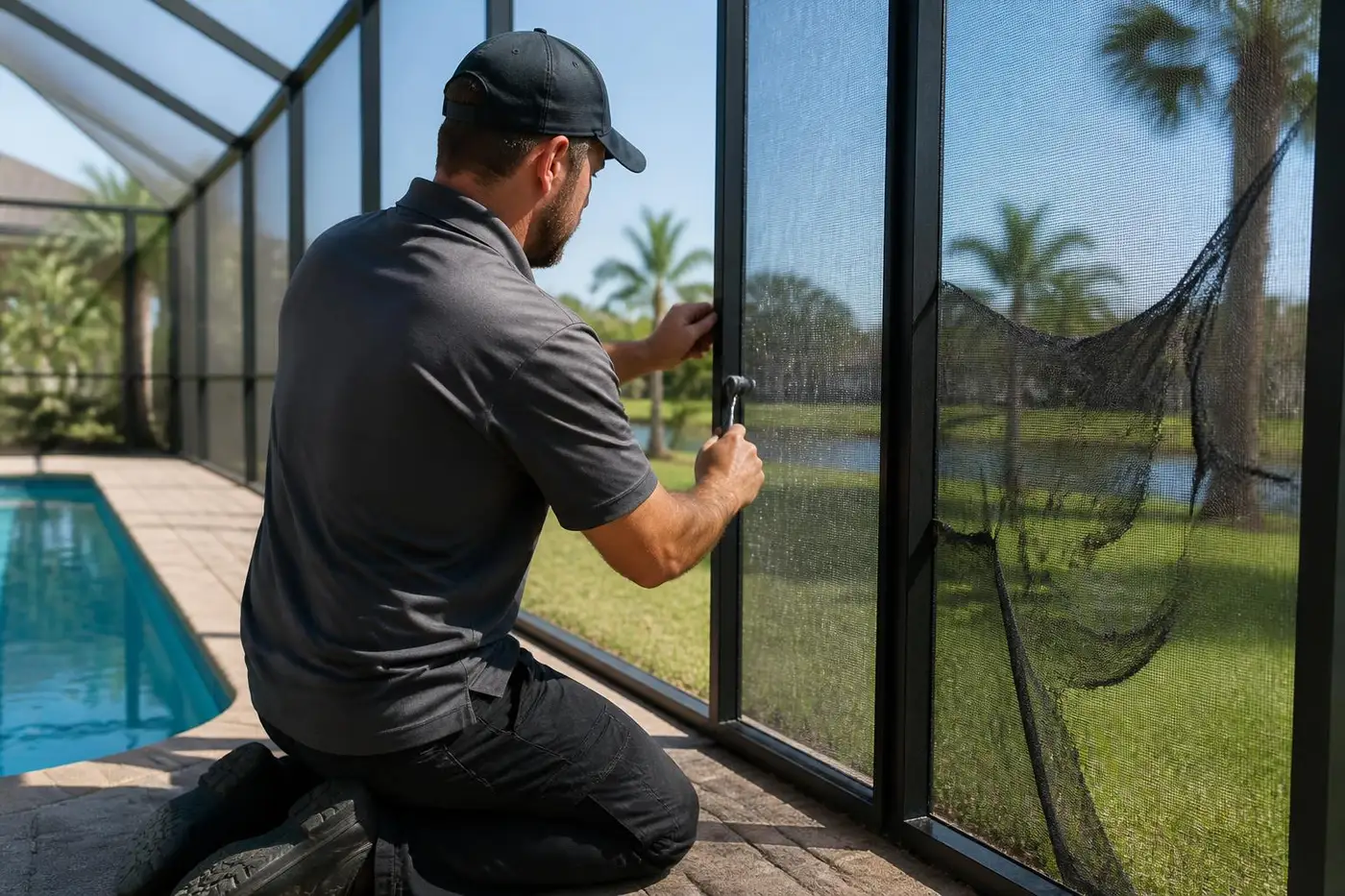
A pool screen enclosure repair can include re-screening damaged panels, straightening or replacing bent aluminum frame members, resetting super gutters that have pulled away from the roofline or house wall, rebuilding corroded kickplates at the base, and repairing or re-hanging doors that have racked out of square. We assess the whole structure rather than treating the frame and screen as separate problems, since damage in one often affects the other.
When Structural Issues Show Up Alongside Screen Damage
It's common after a strong summer storm to see both a few torn panels and a bent frame section on the same enclosure - wind that's strong enough to tear screen is often strong enough to flex or bend lightweight aluminum framing too. Similarly, an enclosure that's been standing for many years may show corroded connectors at the same time its screens are aging out, since both problems come from the same long-term sun and moisture exposure.
Repair vs. Replacement for the Whole Enclosure
We repair frame sections and re-screen panels wherever the underlying structure is still sound and properly anchored. Full enclosure replacement becomes the better option when multiple frame sections are corroded past the point of a clean repair, when the structure no longer meets current wind load expectations, or when storm damage has affected the frame's overall alignment enough that patch repairs won't hold long-term.
Repair candidate
Isolated bent panels, a handful of torn screens, minor gutter separation, or corroded fasteners in limited areas.
Replacement candidate
Widespread frame corrosion, racked structure after a major storm, or an enclosure that predates current code wind requirements.
Material Options
Frame repairs use matching aluminum extrusion where possible, along with stainless or coated fasteners suited to Florida's humidity and salt exposure. For the screen side, 18x14 fiberglass mesh is standard, with 20x20 no-see-um mesh and pet screen available for panels where bugs or pets are a bigger concern. Super gutter repairs use compatible gutter profiles and sealant rated for exterior use to keep water moving off the enclosure roofline instead of pooling against the house.
Our Process
We start with a full walk of the enclosure, checking frame alignment, gutter attachment points, door operation, and panel condition. Structural repairs - straightening, replacing frame sections, resetting gutters - are handled first, since screen work depends on a solid, square frame underneath. Once the structure is sound, we re-screen affected panels and finish with a check of every door to confirm smooth operation and secure latching.
Florida Weather Factors
Wind load matters most here: enclosures need framing and anchoring that can handle Jacksonville's storm season without repeated damage. Salt air accelerates corrosion on both frame connectors and screen spline, especially closer to the coast. Heavy pollen season can hide new screen damage under a layer of yellow dust, so we recommend a seasonal look-over each spring.
Planning for Cost
Because this service covers both structural and screen work, cost ranges widely based on how much frame repair versus panel re-screening is needed. A straightforward gutter reset with a few re-screened panels is a modest project; multiple bent frame sections with a full re-screen is more involved. A free on-site estimate gives you a clear breakdown of what's needed before committing to the work.
Service Guide
Inspecting a pool screen system from the outside in
Pool screen enclosures take a different kind of abuse than a patio lanai because they surround standing water, get more direct sun reflection off the pool surface, and are exposed to pool chemicals in the air near the water line. Inspection starts at the roof panels, which take the most UV exposure, then moves down the vertical wall panels, checking for the telltale white haze or brittleness that comes from years of chlorine-tinged humidity combined with sun.
We also check the door leading from the house or patio to the pool deck, since that door gets the most daily traffic and its hardware wears faster than any wall panel. Screws and fasteners near the pool deck get closer attention too, since splashed water and chemical drift accelerate corrosion compared to fasteners on a dry-side enclosure.
Roof panel exposure
Roof panels take the harshest sun and often need attention before wall panels even show visible wear.
Chemical drift zone
Fasteners and mesh nearest the pool water line degrade faster from chlorine-humid air than panels further from the water.
Deck door traffic
The door between house and pool deck sees the heaviest daily use and is checked for latch, closer, and sweep condition.
Mesh choices around chlorinated water and standing humidity
Around a pool, mesh selection has to account for constant humidity and periodic chemical exposure, not just sun. Standard fiberglass insect mesh works fine on wall panels away from the water but tends to show wear faster on roof panels directly above the pool. No-see-um mesh is popular for pool enclosures in this region because it keeps out small biting insects that are drawn to standing water, though its tighter weave collects more airborne debris and needs rinsing more often near a pool deck.
Solar screening on west- or south-facing wall panels can meaningfully cut glare off the water and reduce how hot the deck gets in the afternoon, which is a common upgrade request during a pool enclosure repair rather than a like-for-like mesh replacement.
Frame and hardware issues specific to pool enclosures
Pool enclosure frames sit closer to standing water and pool chemicals than a standard patio screen frame, which changes what to watch for. Base tracks near the pool deck collect splashed water and can hold moisture against the aluminum longer than a dry-side track would, so we check those tracks for pitting or corrosion as a routine part of a repair visit.
Roof support framing on a pool cage carries more load than a flat lanai roof, so any bowing or fastener looseness up top gets flagged before touching the mesh, since replacing screen against a compromised roof frame doesn't hold long.
Repair sequence and preparing the pool deck
Before starting repair work at a pool enclosure, pool furniture, floats, and deck equipment need to be moved clear of the panels being worked on, and pool covers or skimmer baskets should be accessible in case debris from the old mesh needs to be kept out of the water. Old mesh and spline are removed from the affected panels, the track is cleaned, and new mesh is stretched and spline-rolled into place, working carefully near the pool edge where footing on wet decking needs extra care.
Because pool areas often see year-round outdoor living in Jacksonville, scheduling repair work around pool use — rather than mid-swim — keeps the process smoother, and letting us know if there's a scheduled pool service visit around the same time helps avoid overlapping crews.
What affects the cost of a pool enclosure repair
Cost planning for pool screen repair tracks similar factors to any enclosure repair — panel count, mesh grade, and frame condition — but pool cages often add height and roof-panel access as additional variables. Two-story pool cages or cages with steep roof pitches take more time and equipment to reach than a single-story wall panel, which affects the planning range.
Chemical and moisture exposure near the water line can also mean more fastener replacement than a similarly sized dry-side enclosure would need, since corrosion tends to concentrate closer to the pool.
Maintenance habits that protect a pool enclosure long term
Rinsing pool enclosure mesh regularly matters more here than on a standard patio screen, since chlorine residue and mineral deposits from pool splash can build up on the weave and accelerate brittleness. Keeping pool chemicals stored and dosed away from direct contact with screen panels avoids localized chemical damage to the mesh.
Checking roof panels after storms for pooled debris or leaf buildup prevents excess weight from stressing the mesh, and a periodic look at deck-side fasteners for early corrosion can catch a problem while it's still a simple screw replacement rather than a frame repair.
Deciding between a repair and a full pool enclosure rescreen
A full rescreen of a pool enclosure often makes more sense than ongoing spot repairs when the roof panels show widespread chalking or brittleness, since roof mesh tends to age at a fairly uniform rate across the whole structure once it's been exposed to years of direct sun over water. Patching one roof panel while the rest are at a similar age typically just delays the next repair by a short interval.
Storm season adds urgency to this decision for pool cages specifically, since a torn or weakened roof panel over a pool can let in significant wind-driven rain and debris. Evaluating the whole roof section before storm season, rather than after storm damage appears, is the more practical approach for pool enclosures in particular.
Keep Reading
Related services to compare
Fix it first: Pool Enclosure Repair
Targeted fixes for torn screen, damaged panels, doors, frames, hardware, and storm damage.
Pool Enclosure Installation for Jacksonville homes
New pool cages, pool enclosures, lanais, screened patios, screen rooms, and custom aluminum structures.
Repair option: Screen Enclosure Repair
Targeted fixes for torn screen, damaged panels, doors, frames, hardware, and storm damage.
Fix it first: Pool Screen Repair
Targeted fixes for torn screen, damaged panels, doors, frames, hardware, and storm damage.
Pool Enclosure Rescreening for worn screen
Fresh mesh across a panel, a wall, or an entire pool cage, with the screen type matched to how you use the space.
Planning Pool Screen Enclosure Installation
New pool cages, pool enclosures, lanais, screened patios, screen rooms, and custom aluminum structures.
Local Coverage
Pool Screen Enclosure Repair across the Jacksonville area
Pool Screen Enclosure Repair in St. Johns
Pool Screen Enclosure Repair in Fruit Cove
Pool Screen Enclosure Repair in Julington Creek
Pool Screen Enclosure Repair in Mandarin
Pool Screen Enclosure Repair in Ponte Vedra Beach
Pool Screen Enclosure Repair in Nocatee
Pool Screen Enclosure Repair in Jacksonville Beach
Pool Screen Enclosure Repair in Orange Park
Pool Screen Enclosure Repair in St. Augustine
Pool Screen Enclosure Repair in Atlantic Beach
Pool Screen Enclosure Repair in Neptune Beach
Pool Screen Enclosure Repair in World Golf Village
Pool Screen Enclosure Repair in Green Cove Springs
Pool Screen Enclosure Repair in Middleburg
Pool Screen Enclosure Repair in Fleming Island
Pool Screen Enclosure Repair in Rivertown
FAQ
Pool Screen Enclosure Repair questions
How is this different from just pool screen repair?+
Pool screen repair focuses on the mesh panels. Pool screen enclosure repair also covers the aluminum frame, gutters, doors, and anchoring holding those panels up.
Can you fix a bent frame section without replacing the whole enclosure?+
In many cases yes, especially if the damage is limited to one or two sections and the rest of the structure is sound.
Do you handle super gutter repairs?+
Yes, resetting or repairing super gutters that have pulled loose from the roofline or house is part of full enclosure repair.
What happens if you find structural damage I didn't call about?+
We'll point it out and explain the options, but we only do work you approve after seeing the estimate.
Will my doors be fixed if they're sticking or not latching?+
Yes, door alignment and latching are checked and repaired as part of this service when the frame is out of square.
Call (904) 853-3510 for a free estimate on your pool screen enclosure repair.
Request an estimate