Post-hurricane repair
Hurricane Screen Enclosure Repair in Jacksonville, FL
Wind-torn mesh, bent posts, and cracked panels repaired after hurricanes hit Jacksonville.
Hurricane season in Northeast Florida brings sustained wind, gusts, and wind-driven debris that screen enclosures aren't built to fully withstand, even when they meet Florida Building Code wind requirements. Hurricane screen enclosure repair addresses the specific kind of damage tropical systems cause: shredded mesh, bent posts, and roof panels torn loose in a single event.
This is different from routine wear-and-tear repair because storm damage tends to hit multiple parts of the enclosure at once, and it often needs a fast response to keep rain and debris out of the pool area or lanai while a fuller repair is scheduled.
We assess the whole structure after a storm rather than just the most obvious damage, since wind stress on one wall or corner can loosen connections elsewhere that aren't immediately visible.
What Hurricane Repair Covers
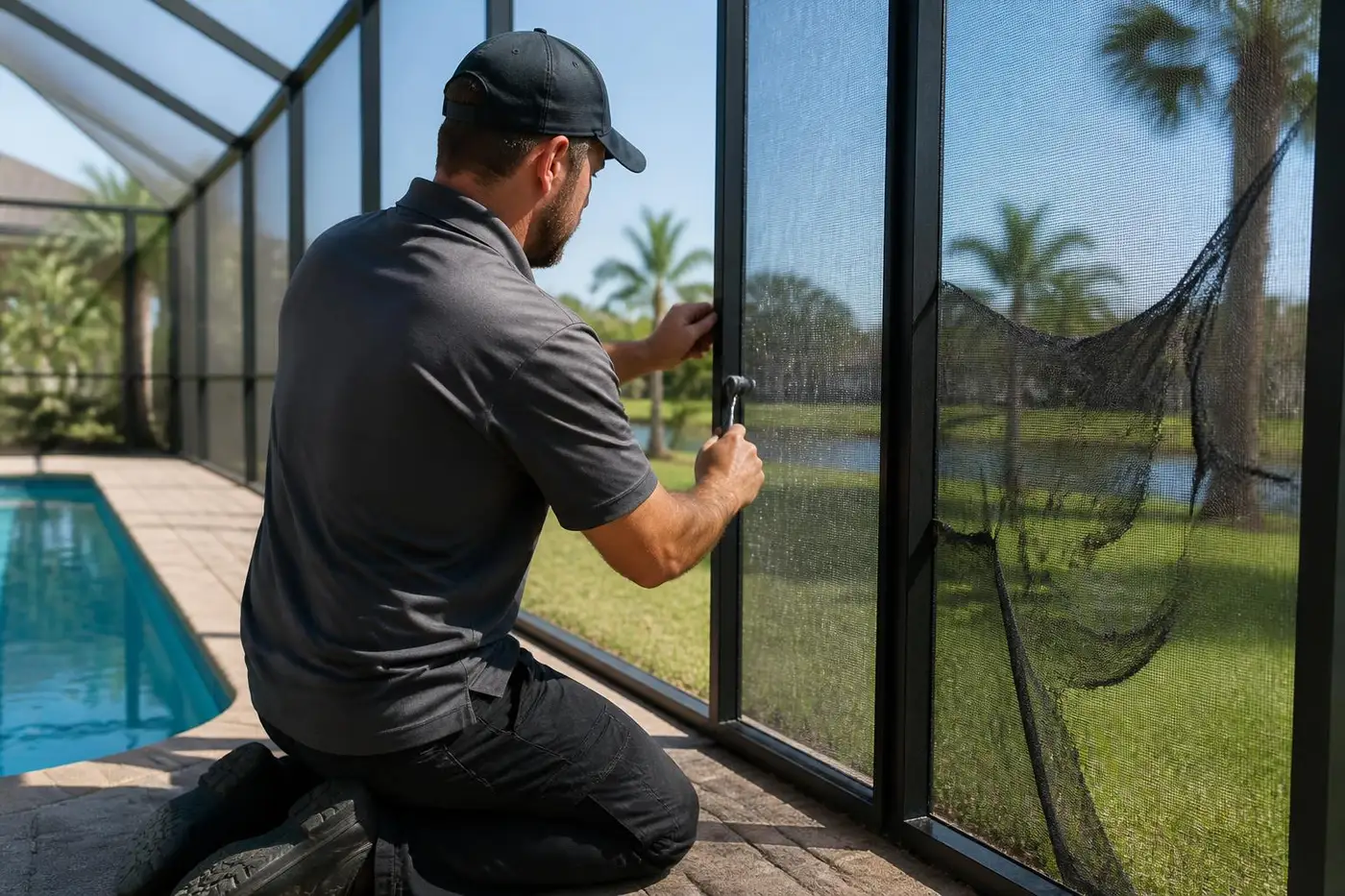
Hurricane-related repair spans torn or blown-out mesh panels, bent or cracked frame members, popped spline, and hardware ripped loose by wind pressure or flying debris. In more severe cases it includes structural bracing for posts that have shifted at their anchors.
Because hurricanes generate wind loads well beyond everyday gusts, damage is often concentrated on the windward side of the structure or around large roof spans, though flying debris can strike anywhere.
Even enclosures that look intact from a distance after a storm can have hairline frame cracks or partially popped spline that only show up on close inspection, which is why a full post-storm check matters even without obvious visible damage.
Why Jacksonville Enclosures Take Storm Damage
Jacksonville sits in a path that regularly sees tropical storm and hurricane wind even when the storm's center passes well offshore or inland, and sustained wind combined with gusts puts real stress on mesh, spline, and frame connections.
Enclosures near the beaches also deal with wind-driven salt spray during a storm, which accelerates corrosion on any hardware or frame connections already stressed by the wind event itself.
Typical Storm Damage Patterns
After a hurricane or tropical storm, these are the most common issues we find.
Documenting the extent of damage with photos as soon as it's safe to do so is also useful, both for your own records and for any insurance conversation that follows.
Blown-out screen panels
Wind pressure differential pops entire panels loose from the spline channel.
Bent or racked posts
Sustained gusts can bend frame posts or rack the whole structure out of square.
Debris punctures
Branches and airborne debris tear holes straight through mesh panels.
Loosened anchors
Repeated flexing during the storm backs anchors and tapcons partway out of the deck.
Repair vs. Rebuild After a Storm
Most post-storm damage, including blown panels and isolated bent posts, is repairable in place using matching mesh and spliced extrusion rather than a full rebuild.
When a hurricane has racked the frame significantly out of square, damaged multiple structural posts, or torn the roof structure loose from its supports, a full enclosure rebuild is usually the more sound path forward rather than repeated patch repairs on a compromised frame.
Materials for Storm-Damaged Sections
Replacement mesh after a storm is matched to the enclosure's existing screen type, whether that's standard 18/14 fiberglass, 20/20 no-see-um, or pet screen, so repaired sections blend with the rest of the structure.
For post and hardware repairs, stainless steel fasteners are worth considering in storm-prone, salt-exposed areas since they hold up better against the corrosion that follows wind-driven salt spray.
The Post-Storm Repair Process
We walk the entire enclosure after a storm, checking every wall, the roof, and every anchor point, since hurricane stress often reveals weaknesses that weren't obvious before the storm.
Torn panels are replaced, bent posts are straightened or spliced, and any loosened anchors are reset into solid concrete. On active storm-damage jobs we prioritize sealing openings first to stop water intrusion, then complete the fuller structural repair.
If multiple properties in your neighborhood were affected by the same storm, expect scheduling to reflect that demand, which is another reason to call as soon as it's safe rather than waiting.
Hurricane Season Timing Considerations
During active hurricane season, June through November in Florida, repair scheduling can be affected by demand spikes after a storm passes through the region, so getting on the schedule early after damage occurs helps.
Between storms, it's worth having an enclosure inspected for existing weak points, loose anchors, or aging mesh, since addressing those ahead of the next storm reduces how much damage a future hurricane can cause.
Cost Planning for Storm Repair
Storm repair costs vary widely depending on how many panels and frame sections were affected and whether the damage is isolated or spread across the whole structure. A few torn panels is a modest repair; a racked frame with multiple bent posts approaches rebuild-level cost.
We provide a free damage assessment so you have documentation and a clear repair scope, which is also useful if you're working with an insurance adjuster on the claim.
Keep Reading
Related services to compare
Fix it first: Screen Enclosure Repair
Targeted fixes for torn screen, damaged panels, doors, frames, hardware, and storm damage.
Pool Enclosure Repair in Jacksonville
Targeted fixes for torn screen, damaged panels, doors, frames, hardware, and storm damage.
Repair option: Storm Damage Screen Enclosure Repair
Targeted fixes for torn screen, damaged panels, doors, frames, hardware, and storm damage.
When repair is done: Hurricane Damaged Screen Enclosure Replacement
Full replacements and rebuilds when an aging or storm-damaged enclosure is past practical repair.
Screen Enclosure Rescreening for worn screen
Fresh mesh across a panel, a wall, or an entire pool cage, with the screen type matched to how you use the space.
Planning Screen Enclosure Installation
New pool cages, pool enclosures, lanais, screened patios, screen rooms, and custom aluminum structures.
Local Coverage
Hurricane Screen Enclosure Repair across the Jacksonville area
Hurricane Screen Enclosure Repair in St. Johns
Hurricane Screen Enclosure Repair in Fruit Cove
Hurricane Screen Enclosure Repair in Julington Creek
Hurricane Screen Enclosure Repair in Mandarin
Hurricane Screen Enclosure Repair in Ponte Vedra Beach
Hurricane Screen Enclosure Repair in Nocatee
Hurricane Screen Enclosure Repair in Jacksonville Beach
Hurricane Screen Enclosure Repair in Orange Park
Hurricane Screen Enclosure Repair in St. Augustine
Hurricane Screen Enclosure Repair in Atlantic Beach
Hurricane Screen Enclosure Repair in Neptune Beach
Hurricane Screen Enclosure Repair in World Golf Village
Hurricane Screen Enclosure Repair in Green Cove Springs
Hurricane Screen Enclosure Repair in Middleburg
Hurricane Screen Enclosure Repair in Fleming Island
Hurricane Screen Enclosure Repair in Rivertown
FAQ
Hurricane Screen Enclosure Repair questions
How soon after a hurricane should I get my enclosure inspected?+
As soon as it's safe to do so, since torn panels or loosened anchors let water and debris continue causing damage until repaired.
Can you match the mesh after storm damage?+
Yes, we match replacement mesh to your existing screen type, whether standard, no-see-um, or pet screen.
Is storm damage usually covered by homeowners insurance?+
That depends on your specific policy, but we can provide a written damage assessment to support a claim if you're pursuing one.
What if my whole frame got racked out of square?+
Significant racking across multiple posts usually points toward a fuller rebuild rather than isolated repairs.
Should I board up torn panels myself before you arrive?+
Temporary coverage over large openings can help limit water intrusion, but we can also prioritize sealing critical openings quickly when we assess the damage.
Do you inspect enclosures before hurricane season too?+
Yes, a pre-season inspection can catch loose anchors or aging mesh before a storm turns a small weakness into major damage.
Call (904) 853-3510 for a free post-storm damage assessment.
Request an estimate